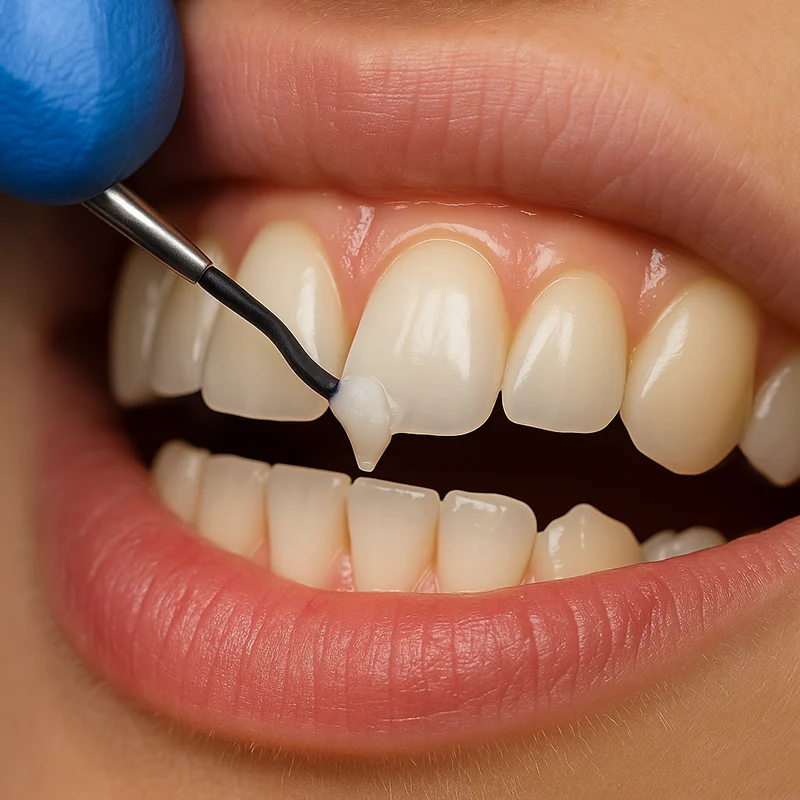
Smile design, planned personally within the scope of aesthetic dentistry, is applied by taking into account the face shape, tooth structure, and patient expectations. The stages of smile design cover a wide area such as dental aesthetics and oral health. Therefore, the process, designed specifically for individuals, is completed differently for each person. So, how does the smile design process work? Here are the details…
How Does the Smile Design Process Work?
The smile design process is primarily determined by considering aesthetic expectations. However, the patient’s functional needs also play an important role at this point. The smile design stages, planned step by step and tailored to the individual, support not only the appearance of the teeth but also the overall oral and dental health. Many factors such as the lip line and facial aesthetics are evaluated within the scope of smile design.

The smile design stages are generally completed with the following steps:
- Initial examination and patient history,
- Intraoral scanning and imaging,
- Impression taking and modeling stage,
- Treatment planning,
- Smile design application and follow-up,
- Final control examination, additional revision sessions if necessary.
The above process may vary depending on the patient’s oral and dental structure. Especially for long-lasting permanent results, the smile design stages must be planned carefully and in detail.
What Are the Smile Design Stages? 7 Important Steps…
The treatment process in smile design requires planning that balances dental appearance with aesthetic harmony, functionality, and the individual’s facial features. For the process to be completed successfully and permanently, certain steps must be applied meticulously. Those who want a healthy and impressive smile should definitely follow the dentist’s recommendations and complete the process.
The smile design stages are as follows:
1- Initial Examination
The smile design treatment process begins with the first communication with the patient. At this stage, aesthetic expectations are listened to, and oral health is also evaluated in detail. Among the smile design stages, the initial examination is important to understand the points the patient is unhappy with in their smile. If there are additional complaints, previous treatments are heard and an appropriate plan is prepared.
Typically, the following evaluations are performed during the initial examination in smile design:
- Detailed examination of the oral and dental structure,
- General assessment of gum health,
- Examination of jaw structure and facial symmetry,
- Evaluation of the patient’s smiling habits,
- Panoramic X-ray or digital scan for treatment suitability.
The first step in the smile design stages usually forms the basis of the process. At the same time, this stage strengthens patient-dentist compatibility and ensures smooth progress of procedures through accurate evaluation.
2- Intraoral Scanning
After the initial examination, the process moves to the intraoral scanning stage. One of the most important advantages offered by digital dentistry, intraoral scanning involves 3D scanners compared to traditional impression methods. In this step, a digital model of the teeth, gums, and jaw structure is created within seconds. An evaluation of the current situation is made through the model to provide precise planning in smile design.
3- Impression Taking and Laboratory Process
The next step in the smile design stages includes impression taking and the laboratory process. In this stage, impressions are taken using classical silicone-based materials, as well as data obtained from digital scanning. These impressions allow for millimeter-precise evaluation of the patient’s current oral and dental structure and are sent to the laboratory.
Thanks to the modeling, both the patient and the dentist can view the final result in three dimensions. When necessary, small changes can be made to provide the most suitable design for the patient, which is one of the most important advantages of this stage.
Recommended content: Smile Design Prices in Istanbul
4- Sample Smile Models
The smile design stages continue with sample smile models to clarify the patient’s expectations and make the procedures to be applied more concrete. At this stage, previously performed case examples are presented to the patient and simulations prepared suitable for their own facial structure are shown digitally. Thus, while the patient sees the final result on their own face, the dentist clarifies the procedures to be performed.
The most commonly used models in smile design are as follows:
- Hollywood Smile: Symmetrical, white, and prominent teeth are emphasized. Usually preferred by young people who want a striking appearance.
- Natural Smile: The soft lines and curves of the teeth’s natural structure are preserved. Ideal for those who want an unnoticed aesthetic.
- Sporty Smile: The central incisors are longer than the lateral incisors. The sporty smile gives an extraordinary, warm, and sincere expression to the patient’s facial area.
- Intellectual Smile: The teeth are aligned on a straight and horizontal line. This design offers a mature and knowledgeable facial expression and highlights the lower part of the face.
5- Treatment of Tooth and Gum Problems
One of the most important stages of smile design is the treatment of tooth and gum problems before application. To achieve an aesthetic smile, not only the appearance of the teeth but also the health of the surrounding tissues and the tooth itself is very important. Therefore, issues such as cavities, tartar, and gum inflammation must be treated during the design process. Gum recession and gum aesthetics are also evaluated among the smile design stages.
During the smile design application, proper positioning of the teeth and making the gum line symmetrical are also important aesthetically. In this context, cavities must be removed and gum problems treated. This procedure increases the durability of the treatment and ensures patient comfort.
6- Smile Design Application
After completing the preliminary evaluation, impression, and digital planning stages, the process moves directly to the smile design application. In this stage, functional and aesthetic procedures are performed according to the model approved by the patient. The duration of the smile design application may vary depending on the condition of the oral structure and the type of procedure.
The smile design stages in this step include the following procedures:
- Whitening treatment to lighten the tooth shade,
- Porcelain veneer or zirconium crowns may be preferred to correct the shape and color of the teeth,
- Bonding procedure for minor aesthetic applications,
- Orthodontic treatment is applied to align teeth if there is crowding or similar issues,
- Implant or prosthesis applications may be performed as complementary treatments in smile design.
Recommended content: Gum Recession After Implant Placement
7- Control Sessions
After the smile design stages are completed, regular control sessions are required to ensure the process is successful. During these sessions, the compatibility of the performed procedures with the oral structure and developments are monitored. The aim of control examinations is to allow small adjustments to be made on time if necessary. Initial controls are usually performed a few days or a week after the application. Then they continue at certain intervals according to the dentist’s recommendation.
During control sessions, the position of laminates or crowns, gum compatibility, the patient’s general comfort, and chewing function are examined in detail. Minor corrections, polishing, or adaptations are made at this stage if needed.
For more information about the treatment, you can review the details at Smile Design.