Dental Scaling (Tartar Removal) is one of the most important dental procedures for a healthy mouth and an aesthetic smile. Plaque buildup, which cannot be completely prevented even with daily brushing and flossing, hardens over time and turns into tartar. This condition threatens gum health and causes bad breath and aesthetic problems. So, how does tartar form, what are its symptoms, and how is dental scaling performed?
In this article, we will cover all stages of dental scaling, the methods used, post-procedure care, and frequently asked questions in detail.
What is Tartar?
Tartar (also called calculus) is a mineralized structure formed by the hardening of plaque on the teeth and near the gums. Plaque is composed of bacteria in the mouth, food debris, and saliva. If plaque is not regularly cleaned, it combines with calcium and phosphate minerals in saliva and turns into tartar.
Important Note: Tartar is not just an aesthetic problem; it also paves the way for serious conditions such as gingivitis and periodontitis.
What are the Symptoms of Tartar?
Tartar formation usually develops slowly, but you should visit a dentist if you notice the following symptoms:
- Redness and swelling in the gums
- Bleeding while brushing or flossing
- Bad breath (halitosis)
- Rough and hard layer on the tooth surface
- Discoloration and aesthetic issues in teeth
Why is Dental Scaling Important?
Dental scaling is not just an aesthetic procedure; it directly affects oral health. Its main benefits include:
- Prevents gum diseases: Reduces the risk of gingivitis and periodontitis.
- Eliminates bad breath: Prevents bacterial growth.
- Maintains natural tooth color: Removes yellowish appearance.
- Prevents tooth loss: Stops tooth loss caused by advanced gum diseases.
- Improves oral hygiene: Makes brushing and flossing more effective.
1. Preliminary Examination and Preparation
- The dentist examines the oral cavity in detail. The amount of tartar, inflammation in the gums, possible gum recession, and risk of tooth loss are checked.
- In some cases, panoramic X-ray (2D) or 3D dental tomography (CBCT) may be requested to determine if tartar has extended below the gum line.
- Before the procedure starts, the patient is made comfortable. Local anesthesia may be applied for sensitive gums, but it is generally not necessary.
2. Cleaning with Ultrasonic Device (Scaler)
- The main step is the ultrasonic scaler device. This device breaks tartar with high-frequency vibrations while spraying water to remove the debris.
- The water spray system continuously cools the tooth surface and prevents heat buildup during the procedure.
- The patient usually hears a “tapping” sound and feels vibrations in the teeth. It is not painful, only slightly uncomfortable.
- Both supragingival (above the gum) and subgingival (below the gum) areas are cleaned.
3. Manual Scaling (Fine Cleaning)
- The ultrasonic device may not remove all tartar. Small remnants may remain in tight spaces or under the gums.
- At this stage, the dentist uses fine hand instruments called curettes.
- Curettes scrape remaining tartar without damaging the tooth surface.
- This step ensures the tooth surface is completely smooth after the procedure.
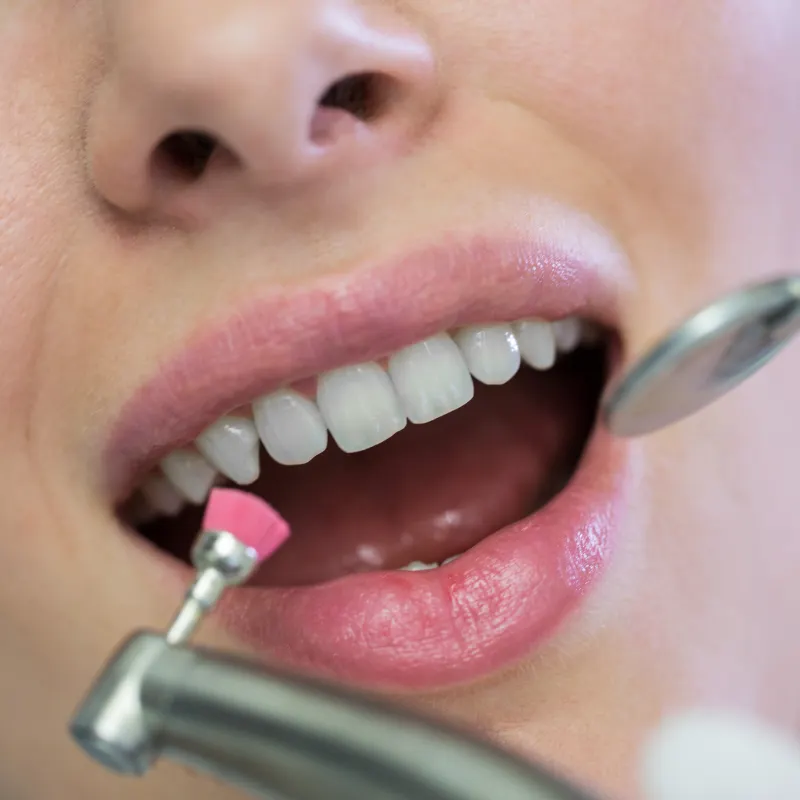
4. Polishing
After the tartar is completely removed, the next step is polishing.
Rotary brushes or rubber heads are used.
Fluoride-containing polishing paste is applied to the heads, and teeth are polished.
Polishing provides:
- Brighter and smoother teeth appearance
- Reduced bacterial and plaque adhesion
- Whiter teeth appearance
5. Fluoride Application (Optional)
- Especially for patients at high risk of cavities, the dentist applies fluoride gel or varnish after the procedure.
- Fluoride strengthens the enamel and prevents cavities.
- This application usually takes a few minutes and patients should avoid eating immediately afterward.
6. Patient Education and Recommendations
After the procedure, the dentist gives personalized recommendations:
- Regular brushing (twice a day, 2 minutes each)
- Use of dental floss or interdental brushes
- Antiseptic mouthwash (especially for patients with gum problems)
- Reduce habits that accelerate tartar buildup, such as coffee, tea, and smoking
How Long Does the Procedure Take?
- It varies depending on the amount of tartar.
- On average, it takes 20 – 40 minutes.
- For patients with heavy tartar, the session may be divided into two (e.g., lower and upper jaw on separate days).
Post-Procedure Care
Mild tooth and gum sensitivity after scaling is normal and usually subsides within a few days. Post-procedure recommendations:
- Avoid extremely hot or cold foods for the first 24 hours.
- Avoid hard foods (nuts, seeds, etc.).
- Continue regular brushing and flossing.
- Use antiseptic mouthwash to reduce bacterial growth.
- Limit smoking and coffee consumption.
How Often Should Dental Scaling Be Done?
Typically, dental check-ups and scaling are recommended every 6 months. However:
- For smokers
- For those with poor oral hygiene
- For patients with a history of gum disease
more frequent cleanings may be necessary.
Is Dental Scaling Harmful?
One of the most frequently asked questions is this. Dental scaling does not harm the enamel. On the contrary, it is a procedure that protects the gums and teeth. Without regular scaling, the risk of periodontitis increases, which can lead to tooth loss.
Can Tartar Be Removed at Home?
Although some “dental scaling kits” are available online, home tartar removal is not recommended. Incorrect use of these kits can damage the enamel and gums. The most effective home measures:
- Regular brushing
- Flossing
- Mouth rinses
- Avoid sugary foods
However, these measures only reduce plaque formation and do not remove existing tartar.
Frequently Asked Questions
Does dental scaling hurt?
It generally does not cause pain because the ultrasonic device works with vibrations and does not damage the enamel. However, patients with gum inflammation or those who have not had cleaning for a long time may experience mild sensitivity and bleeding.
- If your pain threshold is low, your dentist may apply local anesthesia.
- Mild sensitivity lasting a few days after the procedure is normal and will subside over time.
Do teeth feel loose after scaling?
Tartar puts pressure on the gums, creating a false sense of stability. After cleaning, this pressure is relieved, so teeth may feel slightly loose. This does not mean the teeth are weakened; on the contrary, they are healthier.
- If severe periodontitis is present, bone loss may already exist, and teeth may appear loose. In such cases, additional treatment (curettage or surgery) may be recommended by your dentist.
Does dental scaling damage the enamel?
No, professional devices and correct techniques ensure the enamel is not damaged.
- Ultrasonic devices target only tartar.
- On the contrary, tooth surfaces become smooth, making plaque buildup harder. Harm occurs only with incorrect home scraping.
How long does dental scaling take?
- It usually takes 20 – 40 minutes.
- If tartar is heavy or extends below the gum line, the procedure may take longer.
- In some advanced cases, the cleaning may be divided into multiple sessions.
How often should dental scaling be performed?
Generally, scaling is recommended every 6 months. However:
- For smokers
- For those who consume excessive coffee or tea
- For patients with a history of gum disease
- For those undergoing orthodontic treatment
more frequent check-ups (every 3-4 months) may be required.