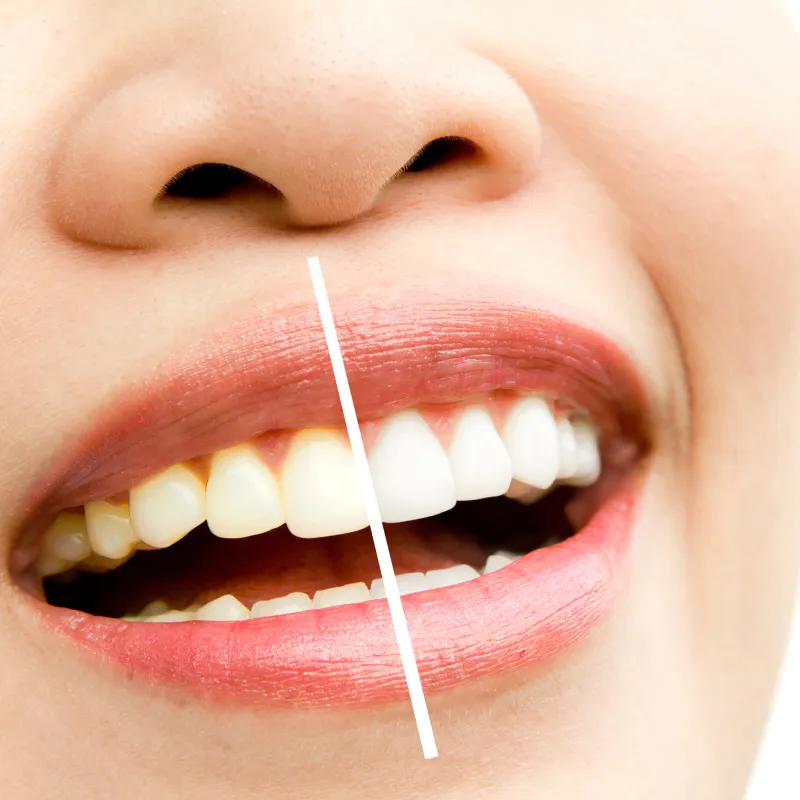
A smile is one of the most noticeable features in first impressions. However, yellowing of the teeth can negatively affect both a person’s aesthetic appearance and self-confidence. Many factors such as tea, coffee, smoking, colored foods, medication use, and aging can cause permanent discoloration of the teeth. At this point, the most commonly preferred aesthetic solutions are teeth whitening (bleaching) and porcelain veneers.
So, which option is the right choice for you?
- Do you only want short-term whiteness?
- Or do you dream of a permanent, aesthetic, and long-lasting smile?
In this article, we will examine both methods with their advantages, disadvantages, costs, and longevity to provide a comprehensive guide that will help you make a decision.
What is Teeth Whitening (Bleaching)?
Teeth whitening is a modern aesthetic dentistry procedure that restores teeth that have discolored or yellowed over time to a more aesthetic and healthy appearance. Daily habits such as consuming coffee, tea, red wine, cola, smoking, and age-related thinning of the enamel can lead to difficult-to-reverse discoloration. This often causes people to hide their smiles, lose self-confidence, and feel uncomfortable in social situations.
At this point, teeth whitening allows you to achieve a more aesthetic smile by lightening the tooth color without damaging the structure of your teeth, using special whitening gels and light technology. During the procedure, gums are protected with special barriers, the whitening gel is applied to the tooth surface, and then activated with laser or LED light. This results in a noticeable lightening of the teeth.
The procedure may vary depending on the person. Some individuals achieve their desired whiteness in a single session, while others may require multiple sessions or home-supportive treatments. In all cases, the main goal is to help the person achieve a brighter and healthier smile without altering the natural tooth structure.
What is Porcelain Veneer?
Porcelain veneers, commonly known as “laminate veneers”, are one of the most advanced solutions in aesthetic dentistry. They are applied by bonding thin, semi-transparent porcelain layers to the front surface of the teeth. The name comes from this: think of them as “thin sheets” attached to the front of the teeth.
This method does not only change the color of the teeth but also corrects chips, gaps, misalignments, and shape irregularities. In other words, porcelain veneers are not just a whitening solution but a complete smile aesthetic solution.
The application process is highly technological and personalized. First, the patient’s dental structure and facial features are analyzed using digital devices. Then, with digital smile design (DSD), the new smile is prepared in a computer environment, allowing the patient to see the results in 3D before starting the treatment. Afterward, a very thin layer is removed from the front surface of the teeth (sometimes not even necessary), and custom porcelain veneers are created in a lab. Finally, these veneers are bonded to the teeth with special adhesives.
Result: An aesthetic, white, durable, and long-lasting smile that is indistinguishable from natural teeth. Veneers are resistant to external factors such as coffee, tea, and smoking, and with proper care, they can last 10–15 years without issues. Therefore, they are the ideal solution for those seeking permanent whiteness and a flawless smile.
Comparative Analysis: Whitening vs Veneers
| Feature | Teeth Whitening | Porcelain Veneer |
| Durability | 6 months – 2 years | 10–15 years |
| Scope of Solution | Color only | Color + shape + aesthetics |
| Application | Gel + light, non-invasive | Thin porcelain layer |
| Natural Look | Natural teeth preserved | Natural porcelain appearance |
| Cost | More economical | Higher |
| Target Audience | Patients with superficial discoloration | Those seeking a permanent solution or aesthetic correction |
When to Choose Which?
If there is only superficial yellowing: Teeth whitening is a more suitable solution.
Severe discoloration (antibiotic stains, genetic color defects): Veneers are the only permanent solution.
If there are shape irregularities, gaps, or chips: Veneers should be preferred.
If you want a faster and more economical solution: Whitening is ideal.
If you want a long-lasting and aesthetic investment: Veneers are the definite solution.
How Does the Treatment Process Work at Ömer İstanbul?
At Ömer İstanbul Dental Center, the treatment process starts with Papaya 3D CBCT imaging and digital smile design (DSD) technologies. This allows our patients to see digitally how their new smile will look before starting the treatment.
- For patients requesting teeth whitening: First, a dental cleaning is performed, followed by in-office whitening. If necessary, home trays are used for support.
- For patients requesting veneers: Impressions are taken, digital smile design is performed, and custom porcelain veneers are prepared. Permanent aesthetics are achieved in a few sessions.
Frequently Asked Questions
Is teeth whitening permanent?
No, teeth whitening is not permanent. Results vary between 6 months and 2 years depending on the person’s habits. In people who consume tea, coffee, or smoke, results may revert more quickly. Regular care, dental floss, and periodic clinical check-ups can extend the effect.
Does whitening cause sensitivity?
Yes, especially in the first few days, teeth may be sensitive to cold or hot foods. This is temporary and usually disappears within 2–3 days. Special toothpastes are recommended for sensitivity.
Will my teeth be shaved for veneers?
No, unlike traditional crowns, the teeth are not reduced. Only a very thin layer (0.3–0.7 mm) is removed from the front surface of the teeth. In some cases, veneers can be applied without any shaving.
Can porcelain veneers fall off or break?
When applied correctly, veneers are highly durable. However, biting extremely hard objects, nail-biting, or teeth grinding can damage them. For patients who grind their teeth, using a night guard is recommended.
When does teeth whitening not work?
Congenital dark stains, antibiotic (tetracycline) stains, and deep discoloration under the enamel cannot be lightened with whitening. In these cases, veneers or zirconia crowns are recommended.
How long do veneers last?
Depending on the quality of application and oral care, veneers can last 10–15 years without issues. Regular dental check-ups prolong their lifespan.