Tooth loss is one of the most significant oral health problems, negatively affecting aesthetics, speech, and chewing functions, and reducing quality of life. Nowadays, dental implants are emerging as the closest and most permanent solution to natural teeth.
As of 2025, Turkey continues to be one of the world’s most preferred centers for dental implants with affordable prices, high success rates, and advanced technologies. So, how much do implants cost, how does the process proceed, and what factors determine the cost?
Why Choose Dental Implants in Turkey?
In recent years, Turkey has become prominent not only for tourism but also as a global leader in health tourism. Especially in dentistry, it has become the first choice for patients from Europe and the Middle East.
- Cost advantage: Dental implant treatment in Turkey is 60–70% more affordable than in Europe and the USA due to currency benefits and lower operational costs.
- Expert dentists: Experienced surgeons in major cities like Istanbul, Antalya, and Izmir perform thousands of implant cases annually.
- Modern technology: 3D CBCT imaging, digital smile design, guided surgery, and CAD/CAM laboratory systems are widely used in Turkey.
- Easy access: Patients can start treatment after a short 3–4 hour flight from Europe.
- Tourism opportunity: Patients can combine treatment with a vacation.
Dental Implant Prices in Turkey 2025
Implant prices in Turkey vary depending on the number of teeth to be treated, implant brand, additional surgical needs, and type of prosthesis.
| Treatment Type | Average Price (2025) | Description |
| Single Tooth Implant | €320 – €800 | Includes implant screw, abutment, and porcelain/zirconium crown |
| Multiple Implants (2–4 teeth) | €560 – €1,500 | Cost advantage for multiple missing teeth |
| All-on-4® | €6,000 – €10,000 | Full-arch fixed prosthesis on 4 implants |
| All-on-6 | €7,200 – €13,500 | More durable full-arch fixed prosthesis on 6 implants |
| Zygomatic Implants | €16,000 – €35,000 | Special treatment for advanced bone loss in the upper jaw |
🔹 These prices are approximate. Costs may increase with bone grafts, sinus lifts, or special prosthesis types. A CBCT scan and examination are required for an exact price.
Factors Determining Implant Prices
Dental implant costs vary for each patient because every treatment plan is personalized. Here are the main factors that affect the price:
Implant Brand
- Premium brands (Straumann, Nobel Biocare): More expensive but have high long-term success rates and global warranty.
- Mid-range brands (MIS, Hiossen, Medentika): More affordable while still offering high success rates.
Number of Missing Teeth
The cost differs significantly between a single implant and a full-arch fixed prosthesis. For example, a single implant may cost around €500, while an All-on-6 treatment can cost several thousand euros.
Type of Prosthesis
- Zirconium crowns: More durable and aesthetic, more expensive than porcelain.
- Porcelain crowns: More affordable but more prone to wear over time.
- Full-arch fixed prostheses: Costs are affected by titanium frameworks or full zirconium bridges.
Additional Surgical Procedures
If bone density is insufficient, procedures like bone grafts, sinus lifts, or PRF applications may be required. These increase the cost.
Clinic and Surgeon Experience
Clinics operating at international standards include sterilization and warranty services in the cost, which ensures safety but slightly increases the price.
Step-by-Step Treatment Process
1. Initial Examination and Planning
- Panoramic X-rays and 3D CBCT imaging are performed.
- Bone structure, missing teeth, and overall health are evaluated.
- A personalized treatment plan is prepared.
2. Surgical Stage
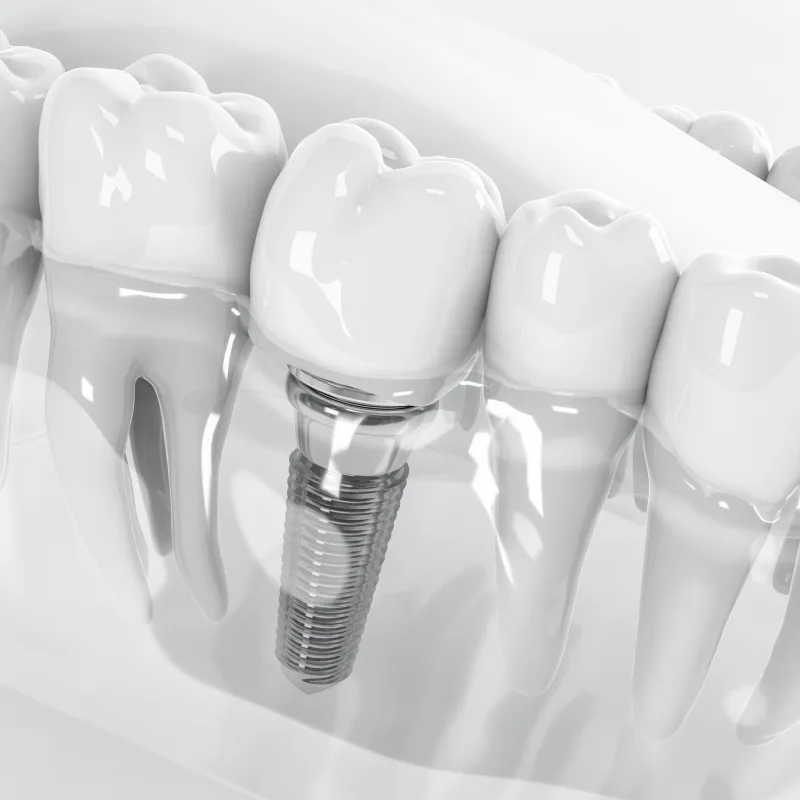
- Implant screws are placed into the jawbone under local anesthesia.
- Bone grafts or sinus lifts are applied if necessary in the same session.
- The patient does not feel pain during the procedure.
3. Healing (Osseointegration)
- Implants integrate with the jawbone over 2–6 months.
- During this period, the patient uses a temporary prosthesis in daily life.
4. Final Prosthesis Stage
- After integration, impressions are taken.
- Zirconium or porcelain crowns are prepared and placed on the implants.
- Natural-like results are achieved in chewing, speech, and aesthetics.
Advantages of Getting Implants in Turkey
Cost advantage: A treatment costing €25,000 in Europe can be done for €6,000–€8,000 in Turkey.
International quality: Globally used implant brands.
Experience: Surgeons perform hundreds of implant operations annually.
Tourism opportunity: Patients can enjoy treatment and vacation in cities like Istanbul or Antalya.
Warranty: Implant passports record your treatment globally.
Frequently Asked Questions
Is implant treatment safe in Turkey?
Yes, dental implant treatments in Turkey are performed safely at international standards.
- Implant brands used are CE and FDA approved.
- Clinics undergo regular sterilization and hygiene checks.
- Experienced surgeons perform thousands of cases annually, minimizing complications.
- Patients receive an “implant passport,” recording brand, serial number, and manufacturing location.
Why are implant prices in Turkey cheaper than in Europe and the USA?
The reason for affordability is economic advantage, not lower quality.
- Labor and clinic operating costs are lower in Turkey.
- Currency differences make treatment more affordable for foreign patients.
- Dentists perform many implant procedures annually, giving bulk purchasing advantages for materials. Therefore, the same quality treatment in Turkey can cost 60–70% less than in Europe.
Is implant treatment painful?
No. Implant treatment is performed under local anesthesia, and patients do not feel pain during the procedure.
- Mild swelling or soreness may occur for 1–2 days after surgery.
- It can be managed with simple painkillers and ice application.
- Most patients say, “It was much easier than I expected.”
How long does the treatment take?
The duration varies per patient:
- Single tooth implant: Approximately 2–3 months.
- Lower jaw implants: Integration occurs in 2–4 months due to higher bone density.
- Upper jaw implants: Softer bone may require 3–6 months.
- All-on-4 and All-on-6 treatments: Temporary fixed bridges are usually placed the same day or the next day; final prosthesis is placed 3–6 months later.
Can implants be done if I have bone loss?
Yes, implants can be placed in patients with bone loss using different techniques:
- Bone grafting: Fills in missing bone.
- Sinus lifting: Adds bone to the sinus area in the upper jaw.
- Zygomatic implants: For severe upper jaw bone loss, implants are fixed to the cheekbone.
These methods allow patients with advanced bone loss to receive permanent teeth.