Tooth loss can significantly affect quality of life both in terms of health and aesthetics. A toothless mouth not only causes difficulty in chewing but can also lead to speech problems, digestive issues, and reduced self-confidence. While traditional implant treatments offer a permanent solution, they may not be suitable for every patient due to the need for multiple implants, long healing periods, and sometimes bone grafts.
This is where the next-generation implant systems known as All-on-4 and All-on-6 come into play. With these methods, edentulous patients can regain their fixed teeth in just one day.
What Are All-on-4 and All-on-6?
All-on-4 and All-on-6 systems are named after the number of implants used.
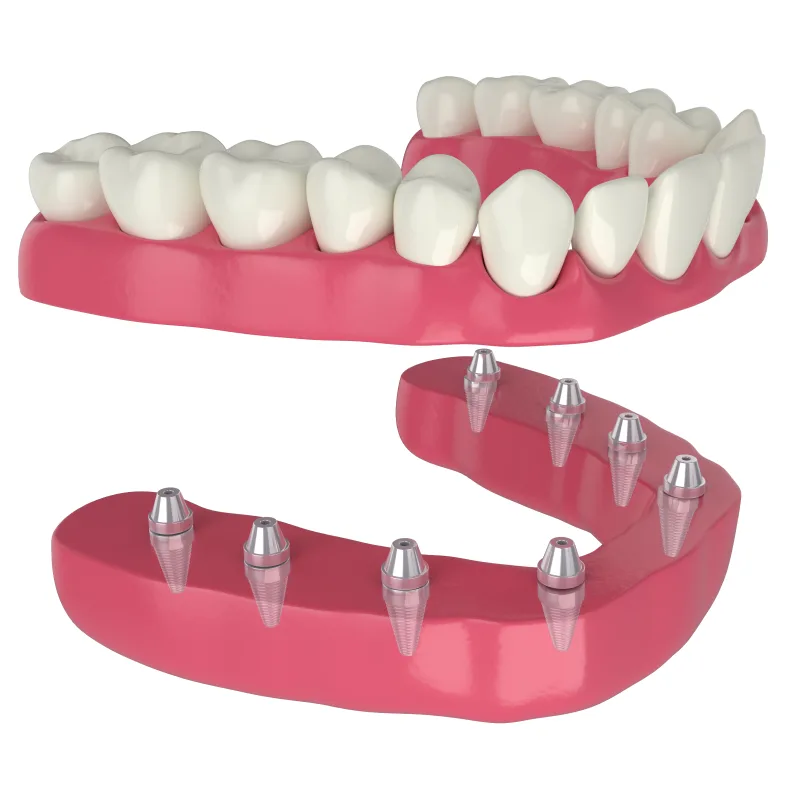
In these methods, 4 or 6 implants are placed into the jawbone to support a fixed prosthetic bridge.
Unlike traditional methods, where each missing tooth requires a separate implant, these systems allow a full set of teeth to be created with far fewer implants.
In the All-on-4 technique, two implants are placed vertically in the front, while two implants are angled approximately 30–45 degrees in the back. This angulation provides strong support even in patients with limited bone.
The All-on-6 method follows a similar principle but with two additional implants. With more support points, the load is better distributed, providing higher durability in the long term.
In short, All-on-4 is designed for patients with bone loss, whereas All-on-6 is a stronger and longer-lasting option for patients with sufficient bone structure.
Treatment Process Step by Step
The All-on-4 / All-on-6 treatment is personalized. The stages are generally as follows:
Examination and Imaging
- Panoramic X-rays and 3D dental tomography (CBCT) are taken.
- Bone density, nerve positions, and anatomical structures are evaluated.
- The patient’s overall health, including diabetes and smoking habits, is considered.
Digital Treatment Planning
- Implant positions are determined using computer-assisted surgical software.
- Prosthetic design, aesthetic lines, and bite height are planned.
Surgical Procedure
- The procedure is usually performed under local anesthesia (sedation optional).
- If teeth need to be extracted, implants can be placed in the same session.
- Average procedure time: 1.5 – 3 hours.
Temporary Prosthesis Placement
- Generally, a fixed temporary prosthesis is placed for the patient on the same day or within 24 hours.
- However, in certain clinical situations (such as insufficient bone or low primary stability), placing the temporary prosthesis on the same day may not be medically appropriate. In such cases, the process is planned according to the doctor’s assessment.
- After the procedure, the patient usually goes home with teeth.
Healing Period (3–4 Months)
- During this period, implants integrate with the bone (osseointegration).
- The patient continues a soft-food diet.
Permanent Prosthesis Placement
- After 3–4 months, permanent fixed teeth are placed on the implants that have integrated with the jawbone.
- These prostheses are aesthetic, durable, and long-lasting.
Differences Between All-on-4 and All-on-6
| Feature | All-on-4 | All-on-6 |
| Number of Implants | 4 | 6 |
| Support Points | Fewer implants | More implants |
| Bone Requirement | Less bone sufficient | Sufficient bone volume needed |
| Durability | High | Higher |
| Cost | More economical | Slightly higher |
| Preferred Cases | Patients with advanced bone loss | Young or patients with strong bone structure |
Advantages
- Fixed teeth in one day: Temporary teeth prevent the patient from being toothless after treatment.
- May not require bone graft: Particularly ideal for All-on-4, suitable for patients with bone loss.
- Natural appearance: Provides aesthetics very close to real teeth.
- Fewer surgical procedures: Shorter and more comfortable than traditional implant methods.
- Easy maintenance: Simple to clean and care for.
- Long lifespan: Can last more than 20 years with proper care.
Who Is It Suitable For?
All-on-4 and All-on-6 systems are ideal for people who have complete tooth loss or whose remaining teeth are unsalvageable.
It also benefits patients who struggle with stabilizing dentures or feel discomfort with removable dentures.
It can be applied to anyone over 18 years old with completed jaw development and good general health.
For chronic conditions such as diabetes, heart disease, or hypertension, a personalized treatment plan is made with the doctor’s approval.
Recovery and Aftercare
Mild pain and swelling may occur in the first few days after implant placement. These symptoms usually resolve quickly.
During the first week, it is important to eat soft foods and maintain oral hygiene.
After permanent prostheses are placed, patients can return to a normal diet, including biting apples, eating meat, and chewing hard foods.
Regular dental check-ups are essential for the long-lasting success of implants.
Post-implant care includes brushing at least twice a day, using interdental brushes or floss, and professional maintenance at least twice a year.
With proper care, implants can function flawlessly for over 20 years.
Important Considerations
Although All-on systems have high success rates, treatment success depends on the patient’s discipline and lifestyle habits.
Smoking can prolong healing and reduce implant success.
Additionally, patients with bruxism (teeth grinding) may need protective splints to prevent excessive load on implants.
Such precautions are important for long-term treatment success.
Frequently Asked Questions
Are All-on-4 or All-on-6 suitable for everyone?
Not necessarily. Factors such as bone density, overall health, and oral hygiene should be evaluated. Patients with very weak jawbones may require bone grafting. The dentist determines suitability through detailed 3D imaging.
Does it hurt during or after the procedure?
Implant placement is performed under local anesthesia, so no pain is felt during the procedure. Mild soreness, swelling, or bruising may occur afterward but usually resolves within a few days and can be managed with simple painkillers.
Is it really possible to have fixed teeth in one day?
Yes. Temporary fixed prostheses can be placed on the same day as the implants. These teeth are both aesthetic and functional, allowing patients to return to daily life immediately. Permanent prostheses are placed after the healing period (approximately 3–4 months).
How durable are All-on-4 and All-on-6 systems?
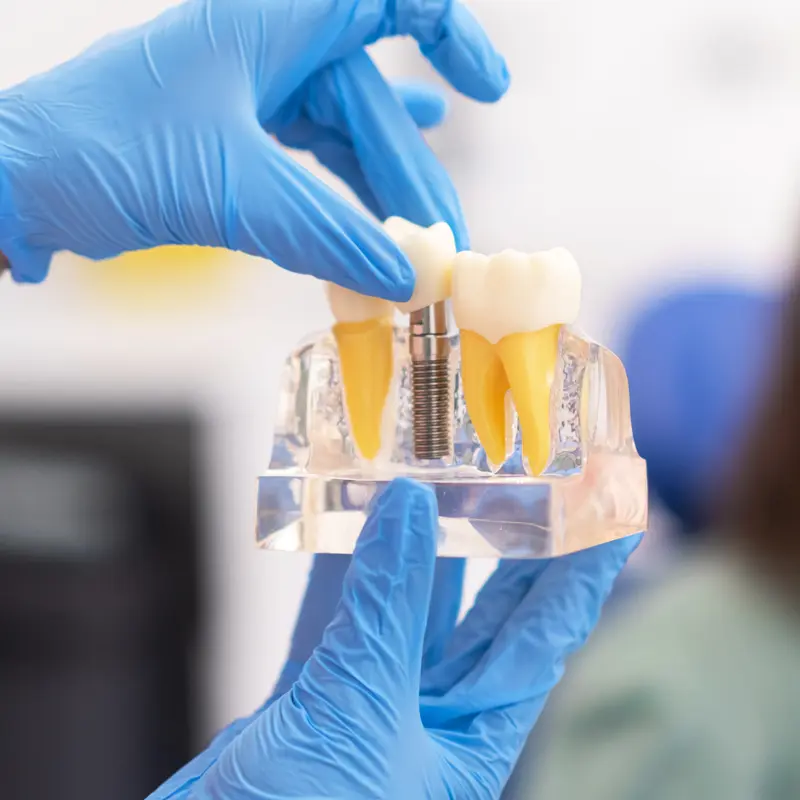
Implants are made of titanium and integrate with the bone, acting like natural tooth roots. With regular care, good oral hygiene, and at least one professional check-up per year, implants can last 20–25 years or even a lifetime.
Why are All-on-4 and All-on-6 prices different?
The number of implants, implant brand, prosthetic material (acrylic, zirconia, porcelain), and clinic equipment affect the cost. Since All-on-6 uses more implants and materials, its cost is generally slightly higher.