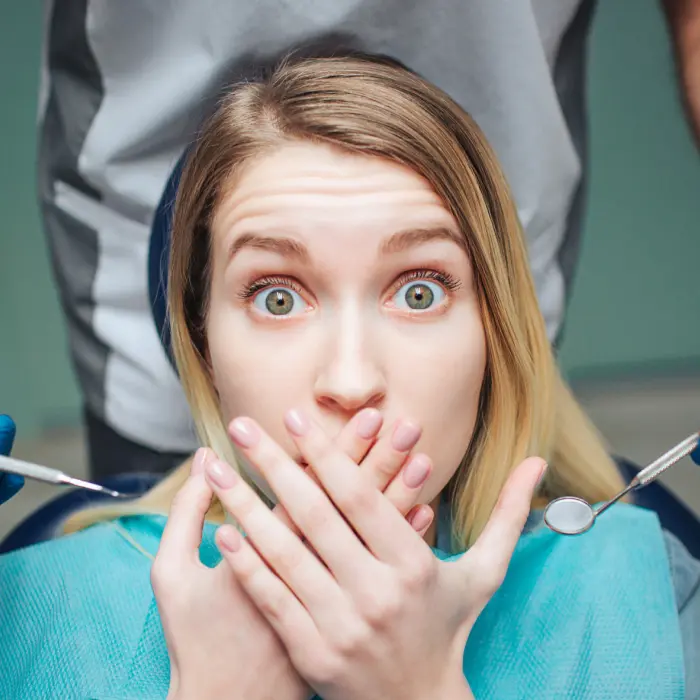
Dentist Fear…
This is a very common condition experienced by a large part of society, sometimes quietly hidden, and sometimes causing people to postpone treatment for years. The number of people saying things like, “My heart races before sitting in the dentist’s chair,” “I feel like running away,” or “I’m not afraid of pain, but of the environment” is much higher than you might think.
In this article, we comprehensively examine why dentist fear occurs, why some people experience it more intensely, its physiological effects on the body, and how it can be controlled with scientific and modern methods.
What is Dentist Fear (Dentophobia)?
Dentist fear is when a person experiences intense anxiety, stress, or avoidance behavior at the thought of visiting the dentist or undergoing treatment.
It can range from mild uneasiness to severe panic attack-like symptoms.
Worldwide, 1 in 3 people have some level of anxiety about visiting the dentist. You are not alone — this is a very common condition.
Symptoms of Dentist Fear
Dentist fear is not just “fear.” The body perceives it as a real threat, producing physical, emotional, and behavioral symptoms:
Physical Symptoms
- Rapid heartbeat
- Sweating, feeling cold
- Shortness of breath, rapid breathing
- Nausea, muscle tension
- Shaking hands
- Dizziness
Emotional Symptoms
- Panic feelings
- Feeling of losing control
- Intense anxiety as if something bad will happen
- Shame or guilt (thoughts like “My teeth are bad, I’m embarrassed”)
Behavioral Symptoms
- Constantly postponing appointments
- Cancelling appointments
- Feeling like turning back as soon as entering the clinic
- Delaying treatment even if in pain
Causes of Dentist Fear
Dentist phobia usually does not stem from a single cause. One or a combination of the following factors can create fear:
1. Past Traumatic Experiences
Negative dental experiences in childhood or adulthood are the most common cause. Especially:
- Insufficient anesthesia
- Painful procedures
- Poor communication with the dentist, which teaches the brain “the dentist is a bad experience.”
2. Environmental Influence and Stories Heard
Exaggerated negative stories from family, friends, or social media can cause phobia even if the person has not experienced it directly.
3. Feeling of Losing Control
Lying in the dental chair, having the mouth open, or not seeing what the dentist is doing can be a strong trigger for some people.
4. Needle or Tool Sounds
- Anesthesia needle
- Dental drill sound
- Suction device sounds can cause panic in some people.
5. Fear of Pain
The thought of “What if it hurts?” triggers stress even before treatment begins.
6. Fear of Shame and Judgment
Thoughts like “My teeth are really bad, they will judge me” or “I should have come earlier” also increase fear.
Problems Caused by Dentist Fear
Avoiding the dentist may seem “relieving” in the short term, but in the long run, it causes bigger problems:
- Small cavities grow and require root canal treatment
- Simple gum inflammation progresses to severe periodontitis
- Number of lost teeth increases
- Pain becomes chronic
- Treatments become more difficult and costly
In short, avoiding treatment due to fear delays it, and delayed treatments are longer and more challenging.
There is a Solution! How to Overcome Dentist Fear
Modern dentistry offers very advanced, completely safe, and effective methods for patients who experience fear or panic disorder. Treatment is now much more comfortable than in the past.
1. First Step: Trust and Communication
The most powerful step in overcoming fear is communicating with the right dentist and feeling safe.
In a successful clinic:
- The dentist explains every step
- No procedure is done without the patient’s consent
- If necessary, the treatment is frequently paused
- The patient is given a sense of control
This approach greatly reduces the subconscious perception of threat.
2. Gradual Approach (Step-by-Step Dentistry)
For some patients, the first appointment may only include:
- Getting to know each other
- Seeing the clinic environment
- A small, painless check-up
Progressing at a pace the patient can tolerate increases trust.
3. Painless Anesthesia Methods
Modern clinics use:
- Thin needles
- Pressure-controlled anesthesia devices
- Topical gel to numb the area beforehand
Thus, the needle sensation is almost eliminated.
4. Sedation (Sleep / Semi-Sleep Treatment)
Effective for patients with intense fear.
Types of Sedation:
- Nitrous Oxide (Laughing Gas) → Mild relaxation
- Oral Sedation (pill)
- IV Sedation (through vein, semi-sleep) → Most effective method
- General Anesthesia → For very severe phobia
Under sedation, the patient does not remember the procedures, and time feels much shorter.
5. Comfortable and Quiet Treatment with Modern Technologies
Digital dentistry allows:
- Quieter drills
- Laser devices
- Low-vibration equipment, making treatment much more comfortable
Some procedures with lasers do not even require needles.
6. Psychological Techniques
Many clinics now use techniques for patients with phobias:
- Breathing-controlled relaxation methods
- Distraction techniques
- Subconscious anxiety-reducing communication
Who Experiences It More Intensely?
Dentist fear may be more frequent and severe in the following groups:
- Those with past traumatic experiences
- People with panic attacks or anxiety disorders
- Individuals with a strong need for control
- People who did not meet a dentist properly in childhood
- Those with needle phobia
This is not related to personality. It is entirely the brain’s automatic protective mechanism.
The Importance of Starting Treatment Despite Fear
Delaying treatment can lead to:
- Bad breath
- Aesthetic concerns
- Chewing problems
- Infection risks
- Social withdrawal
With the right dentist, techniques, and a patient-specific approach, dental treatment becomes very comfortable, safe, and fast.
Approach for Patients with Dentist Fear at Ömer Istanbul Dental Center
Customized according to clinical practices. Can also be made more corporate if desired:
- The first appointment focuses entirely on introduction and information.
- Patients are offered options: regular treatment, sedation, gradual treatment.
- Continuous communication throughout the procedure ensures a sense of control.
- Digital imaging, quiet drills, and painless anesthesia techniques are used.
- Special patient management protocols are applied for those experiencing panic.
Many patients say, “I wish I had come earlier.”
Frequently Asked Questions
Can dentist fear completely go away?
For many patients, fear may not completely disappear but significantly decreases. After a few positive experiences with the right dentist, the brain sends the “no threat now” signal and relaxation begins. Sedation or gradual treatment accelerates this process.
Is sedation safe?
Yes. Especially IV sedation is very safe when applied by a professional anesthesia team. The dose is tailored according to the patient’s age, health, and medical history. The patient is semi-asleep during the procedure, reflexes are active, and returns to normal shortly after.
Does dental treatment hurt?
With modern anesthesia techniques, pain is reduced to nearly zero. Most procedures only produce a mild pressure sensation. Many clinics now use vibration-reducing drills and laser devices, keeping pain under control.
I’m scared, what can I do before my appointment?
- Practice deep breathing exercises
- Schedule appointments in the morning
- Start with a simple check-up
- Talk openly with the dentist about your fears to reduce anxiety
Expressing yourself allows the dentist to plan an appropriate approach for you.
My teeth are bad, I’m embarrassed. What should I do?
This is a very common concern for dentists. No one will judge you. Clinics are used to treating poor dental conditions. Embarrassment is one of the biggest barriers that delay treatment. The first step is simply to have a check-up.
Overcoming Fear is Possible
Dentist fear is common and understandable. However, in modern dentistry, it is no longer an obstacle. With painless techniques, sedation, advanced equipment, and a trust-focused approach, every patient can receive treatment comfortably.