Dental treatment is not just a procedure related to oral health for many people; it can also be a source of anxiety, stress, and fear. Past negative experiences, needle phobia, or even the sound of dental instruments can keep a person away from treatment. This is where sedation provides revolutionary comfort in modern dentistry.
Sedation is a safe administration of medication that allows the patient to relax while remaining conscious, reducing anxiety and fear. Thanks to this method, dental treatment becomes a painless, comfortable, and stress-free experience for many patients.
What is Sedation?
Sedation is a controlled administration of medication that calms and relaxes the patient without completely shutting down consciousness. The goal is to ensure the patient feels comfortable, calm, and fearless throughout the treatment.
Unlike general anesthesia, sedation does not prevent the patient from breathing, speaking, or communicating with the dentist. The patient can respond to commands but does not feel pain, tension, or fear.
How Does Sedation Work?
Medications used in sedation usually act on GABA (gamma-aminobutyric acid) receptors in the brain. These receptors are part of the system that regulates the brain’s anxiety and stress responses. By slowing nerve transmission, the medication helps the patient feel calm, relaxed, and peaceful. This way, even though the patient is awake, the feelings of fear and anxiety are significantly reduced.
Types of Sedation
Dental sedation methods can be applied at different depths depending on the patient’s needs:
1. Oral Sedation
A calming medication is given to the patient before the procedure. It usually takes effect within 30–60 minutes. The patient remains conscious but feels relaxed about their surroundings. It is preferred for simple procedures or mildly anxious patients.
2. Intravenous (IV) Sedation
Sedative drugs are administered directly into the bloodstream through a vein. The effect starts very quickly and the dose can be adjusted in real-time. It is suitable for implants, surgical extractions, or long treatments. The patient experiences deep relaxation and usually does not remember the procedure.
3. Nitrous Oxide (Laughing Gas) Sedation
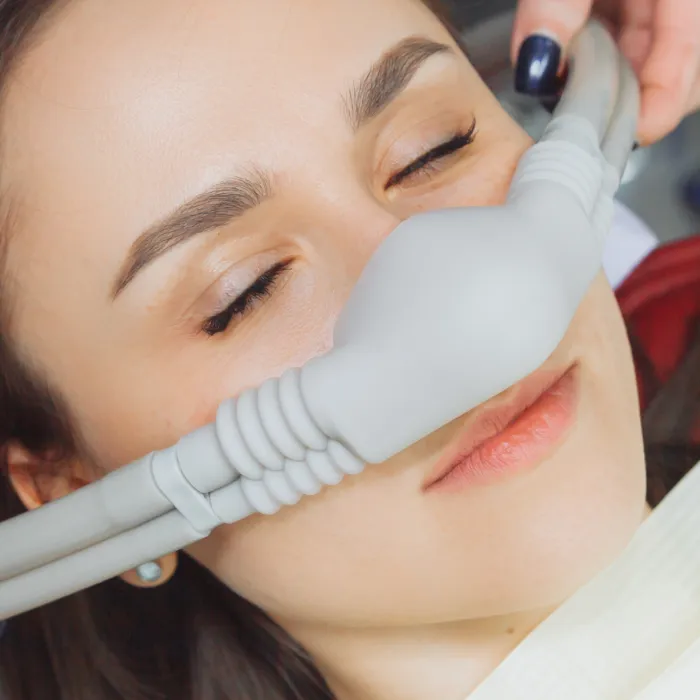
Nitrous oxide is delivered through a mask placed over the nose, and takes effect within minutes. The patient relaxes and feels calm without losing consciousness. After the procedure, the gas wears off quickly, and the patient returns to normal shortly.
4. Combined Sedation
In some cases, more than one method can be used together. For example, a patient starting with oral sedation can receive additional relaxation with laughing gas during the procedure.
Dental Anxiety and the Role of Sedation
Dental anxiety is a common condition seen in approximately 15–20% of adults. These individuals often postpone treatments, leading to more serious problems.
Sedation is an excellent solution to break this cycle. The patient feels safe during treatment, experiences no pain, and leaves the session thinking “there was nothing to fear.” This experience can help reduce dental anxiety in the long term.
Advantages of Sedation
- Eliminates fear and anxiety. Especially beneficial for patients with dental phobia, making it easier to undergo treatment.
- Minimizes pain. When combined with local anesthesia, it provides a completely painless experience.
- Allows long procedures to be completed in a single session.
- Safe, as consciousness remains intact.
- Reduces gag reflex and muscle tension.
- Makes treatment easier for children and patients with disabilities.
Who is Suitable for Sedation?
Sedation is especially recommended for the following patients:
- Those with dental anxiety,
- People sensitive to needles or dental equipment sounds,
- Patients undergoing long surgical procedures,
- Individuals with a strong gag reflex,
- Children or individuals with cognitive disabilities.
However, pregnant women and patients with serious cardiovascular or respiratory conditions must get a doctor’s approval before sedation.
Precautions Before Sedation
- Do not eat at least 6 hours before the procedure.
- Inform the dentist about any regular medications.
- Avoid alcohol or stimulant consumption.
- Have a companion to take you home after the procedure.
- Wear comfortable, loose clothing.
What Happens During Sedation?
Once the patient sits in the dental chair, the sedative medication is administered. Within minutes, a feeling of calmness begins, and surrounding sounds and stress factors become insignificant. The dentist starts the procedure, and the patient feels no pain, remaining lightly aware. After the procedure, a short observation period ensures the effects wear off before discharge.
After Sedation: What to Keep in Mind
- Do not drive or perform tasks requiring full attention for the first 12 hours.
- Drink plenty of fluids; avoid alcohol and caffeine.
- Rest for the remainder of the day if necessary.
- Mild dizziness or grogginess may last a few hours; this is normal.
Risks and Safety Measures
When performed by experts, sedation is extremely safe. Like any medical procedure, minor risks exist. Possible effects include:
- Mild nausea,
- Temporary dizziness,
- Low blood pressure or changes in heart rate.
These risks are continuously monitored by an anesthesia specialist with heart, oxygen, and blood pressure measurements. Therefore, sedation should only be applied in well-equipped clinics by trained professionals.
Sedation vs. General Anesthesia
Sedation is a mild relaxation state with consciousness intact; general anesthesia is a deep sleep state with complete loss of consciousness.
- Sedation → Ideal for dental anxiety and long procedures.
- General anesthesia → Preferred for extensive surgeries or pediatric patients.
Sedation offers faster recovery and lower risk compared to general anesthesia.
Sedation Dental Treatment Costs
Sedation fees vary depending on the type of medication, procedure duration, and sedation method. Generally, laughing gas sedation is more economical, while IV sedation is more expensive. Costs also consider anesthesia specialist supervision and equipment usage. Planning during pre-procedure consultation is recommended for exact pricing.
Frequently Asked Questions
Do I sleep completely during sedation?
No. Sedation only relaxes you; your consciousness remains intact. However, you may not remember the procedure afterwards.
Is sedation safe for children?
Yes. When administered in appropriate doses under specialist supervision, it is very safe.
How long until I return to normal after sedation?
With laughing gas, a few minutes; with IV sedation, usually 1–2 hours.
Can sedation be used for any dental procedure?
Yes. It can be applied for fillings, root canals, implants, tooth extractions, and other procedures.
Are there side effects of sedation?
Mild nausea, dizziness, or temporary fatigue may rarely occur.
End Dental Anxiety with Sedation
Sedation is a safe and effective method that eliminates dental fear. The patient remains relaxed and conscious, and the dentist can perform the procedure more controlled and efficiently.
If you think, “I am afraid of dental treatment,” sedation dental treatment is an ideal solution for you. You can achieve a healthy smile with a fearless, painless, and safe experience.