


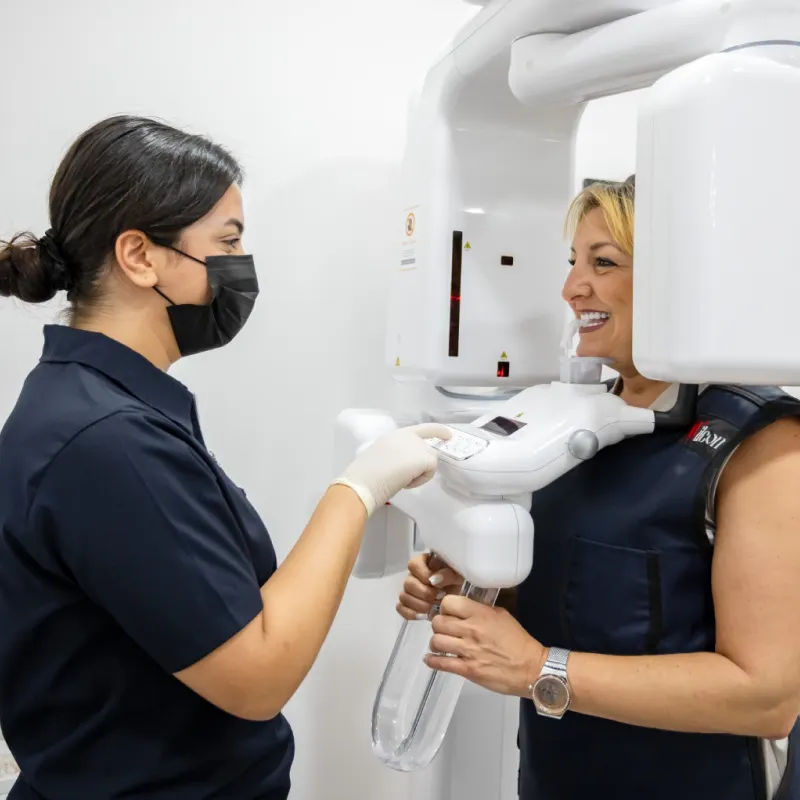
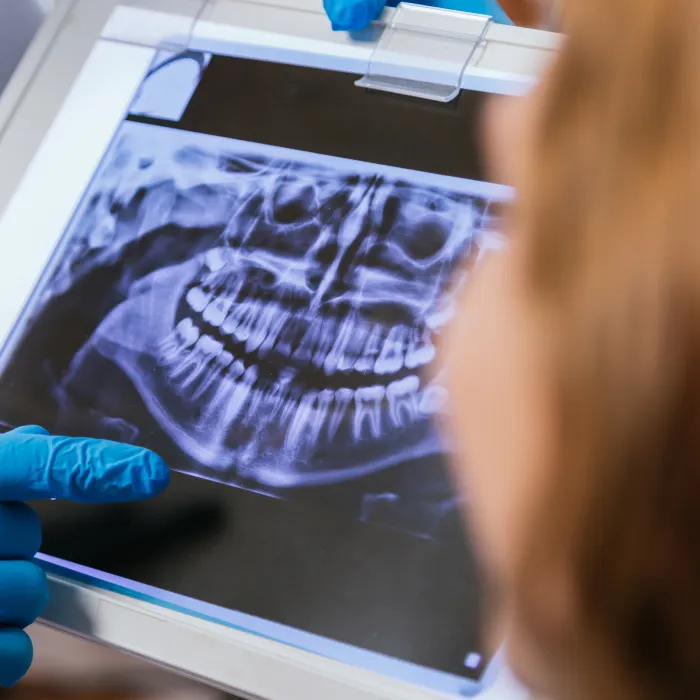
In dental treatments, the most important step is an accurate diagnosis and careful planning. Inadequate or incomplete imaging can lead to complications during treatment. For many years, panoramic X-rays have been widely used in dentistry. However, because they are two-dimensional, they often fail to provide sufficient detail.
Today, one of the most essential technologies in modern dentistry is 3D dental tomography (CBCT – Cone Beam Computed Tomography). This advanced system allows the jaw and teeth to be viewed in far greater detail than traditional methods.
This advanced technology provides a safe roadmap, especially in implant treatments and aesthetic dentistry applications. In this article, we will explain what 3D dental tomography is and highlight the differences of the Papaya 3D CBCT system used in our clinic compared to conventional devices.
What Is 3D Dental Tomography?
3D dental tomography is a special type of computed tomography that provides three-dimensional images of the jawbone, teeth, sinuses, and nerves. This technology allows dentists not only to examine the teeth but also to clearly assess the bone structure, nerve positions, and bone density with high accuracy.
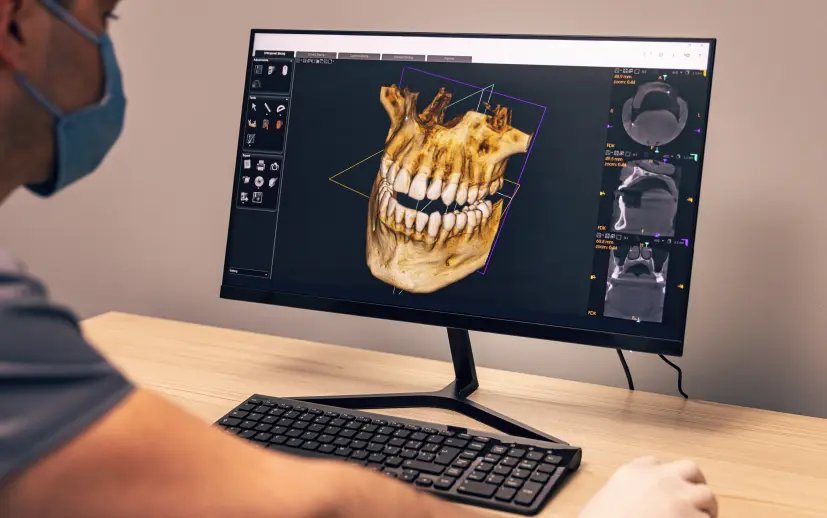
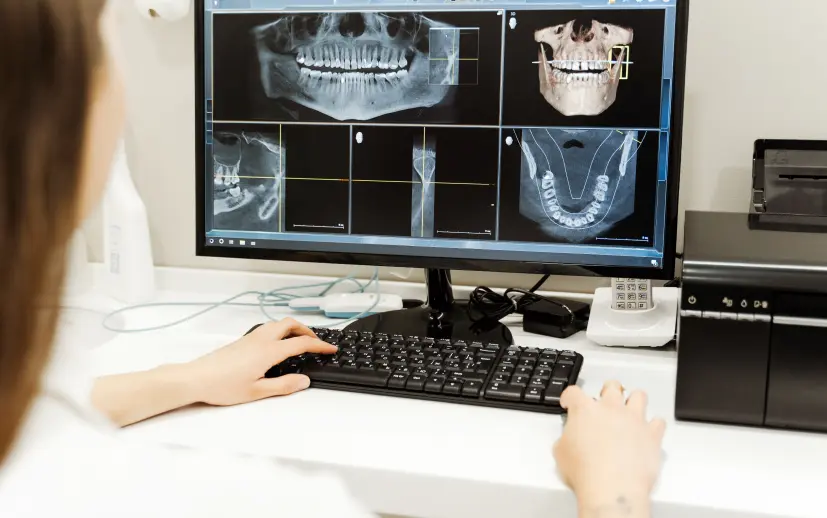
Unlike panoramic X-rays, which produce only 2D images and can overlap certain areas, 3D CBCT offers a complete view from all angles. This makes diagnosis much easier and more reliable. It is especially valuable in implant planning, root canal treatment, wisdom tooth surgery, and maxillofacial procedures, where precision is critical.
It provides a safe roadmap especially in All-on-4 and All-on-6 implant procedures, root canal treatments, wisdom tooth surgeries, and jaw surgeries.
When Is 3D Dental Tomography Used?
3D tomography is commonly used in many areas of modern dentistry:
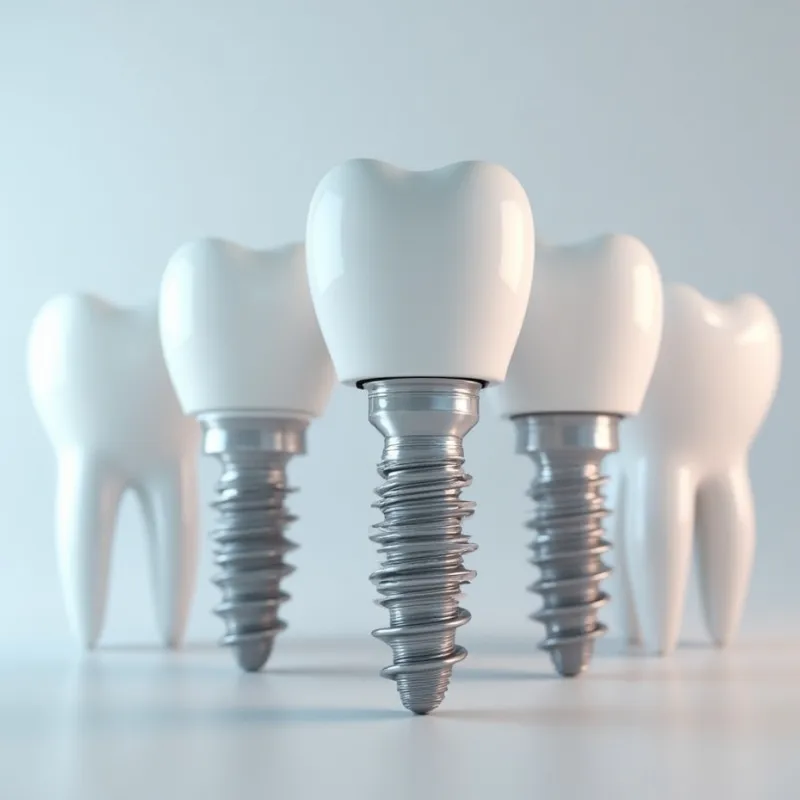
Implant planning: The height, width, and density of the jawbone can be measured in detail. The exact positions of nerves and sinuses are identified, ensuring implants are placed in the safest areas.
Root canal treatments (endodontics): Root canals and infection areas are visualized more clearly, increasing treatment success.
Wisdom tooth surgery: The proximity of impacted teeth to nerves can be carefully evaluated.
Sinus and jaw surgery: Bone structures, sinus cavities, and other anatomical details can be examined with high accuracy.
How Papaya 3D Differs from Conventional CBCT
At our clinic, we use the Papaya 3D CBCT system, which provides several advantages over traditional CBCT devices.
The scanning process takes only a few seconds, making it far more comfortable, especially for children and elderly patients who may find it difficult to stay still. By scanning only the targeted area instead of the entire jaw, unnecessary radiation exposure is minimized, ensuring a safer procedure.
Papaya 3D also reduces metal artifacts caused by existing fillings, implants, or crowns with its advanced software, resulting in much clearer images. This enables dentists to plan treatments with greater accuracy and reliability. As a result, both diagnosis and treatments that require precise planning, such as digital smile design, become much more reliable.
Benefits of Papaya 3D for Patients
Papaya 3D is designed not only to assist dentists but also to improve the overall patient experience. Its short scan time provides comfort, while its reduced radiation dose increases safety. Built-in voice guidance helps patients follow instructions easily, and its accessible design makes the device suitable for elderly and disabled individuals.
Another key advantage is its full compatibility with digital dentistry. Papaya 3D can generate STL files for digital modeling, allowing for digital impressions and the preparation of surgical guides for implant placement. For patients, this means faster, safer, and more predictable results.
3D dental tomography has become an indispensable technology in modern dentistry. With the advanced Papaya 3D CBCT system used in our clinic, we achieve the highest level of safety and accuracy in implant and aesthetic dental treatments.
If you would like to benefit from this advanced imaging technology, feel free to contact us and schedule your appointment today.
Frequently Asked Questions (FAQ)
Is 3D Dental Tomography Harmful?
Compared to conventional medical CT scans, CBCT devices already operate with much lower radiation doses. At our clinic, the Papaya 3D system goes even further by scanning only the necessary area, making it an even safer option than standard CBCT devices.
What Is the Difference Between 3D Tomography and Panoramic X-rays?
Panoramic X-rays provide only two-dimensional images, where certain areas may overlap. In contrast, CBCT creates three-dimensional images, allowing dentists to clearly assess bone thickness, nerve positions, and detailed tooth anatomy.
How Long Does the Scan Take?
With the Papaya 3D system, the scan takes just a few seconds. This is particularly beneficial for children, elderly patients, or those who have difficulty staying still.
How Quickly Are the Results Available?
Images are generated immediately in digital format after the scan. The dentist can review them on the same day and share the treatment plan with the patient right away.


 for Safer and Faster Results)