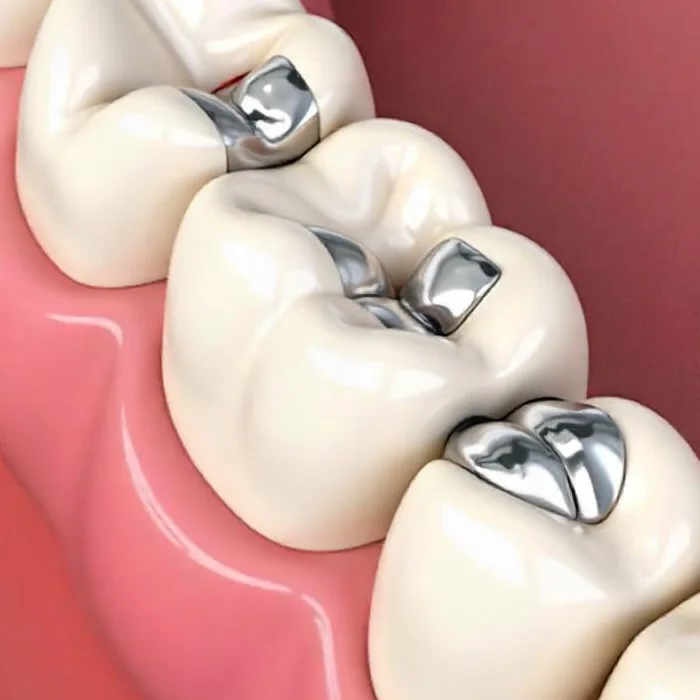
Dental caries are among the most common problems encountered in modern dentistry. If left untreated, they can cause both pain and tooth loss. The goal of cavity treatment is to clean the decayed area of the tooth and fill the resulting cavity with a durable material to restore the tooth’s function. At this point, the long-used amalgam filling emerges as one of the classic yet still effective treatment methods in dentistry.
What Is an Amalgam Filling?
An amalgam filling, commonly known as a “silver filling,” is an alloy made from a combination of metals such as silver, tin, copper, and mercury. When placed into the tooth cavity, this mixture quickly hardens and restores the tooth’s original strength.
Thanks to its metallic components, it is extremely durable and resistant to chewing forces, especially in the back teeth (molars). For this reason, many dentists still safely prefer amalgam fillings in large cavities, just as they have done for decades.
How Is an Amalgam Filling Applied?
An amalgam filling is usually completed in a single session. Before the procedure, the dentist carefully removes the decayed portion of the tooth and sterilizes the area. Then, metal powders are mixed with mercury to form a paste-like amalgam. This mixture is carefully placed into the cavity and shaped to match the natural contour of the tooth.
The filling hardens within a short time, restoring the tooth’s function. Finally, the dentist checks the bite height and polishes the surface to ensure smoothness. The entire process typically takes about 30–40 minutes.
Advantages of Amalgam Fillings
Amalgam fillings are a clinically proven treatment method that has been used for many years. Their biggest advantage is their strength and durability. This type of filling can maintain its form for many years, even in areas exposed to high chewing forces.
Additionally, the application time is short, and it can be successfully placed even in moist environments. This makes it an ideal choice for children or individuals who find it difficult to keep their mouths open for extended periods. Moreover, amalgam fillings are generally more affordable than other modern filling types.
Disadvantages of Amalgam Fillings
Like any treatment, amalgam fillings have some disadvantages. The most noticeable downside is aesthetic; because of their gray metallic appearance, they are typically used in back teeth rather than front teeth.
Due to the thermal conductivity of metal, patients may experience temporary sensitivity to hot or cold temperatures after treatment. However, this usually subsides within a few days.
Some patients express concern about the mercury content in amalgam fillings, but the amount of mercury used in dentistry is minimal and chemically bound, meaning it poses no risk to healthy individuals.
How Long Does an Amalgam Filling Last?
When properly applied, amalgam fillings can last an average of 10 to 15 years, and in some cases up to 20 years. This lifespan depends on the tooth’s location, the patient’s oral hygiene, diet, and habits such as teeth grinding.
With regular dental check-ups, amalgam fillings can function healthily for many years.
Are Amalgam Fillings Harmful?
Because amalgam fillings contain mercury, concerns occasionally arise about their safety. However, international health authorities have confirmed that the amount of mercury used in dental fillings is not harmful to human health.
In amalgam, mercury combines with other metals to form a stable compound, preventing the release of free mercury that could harm the body.
Nevertheless, dentists often prefer alternative filling materials for pregnant or breastfeeding women and young children.
It is not recommended to replace an amalgam filling simply because it contains mercury, as removal can release unnecessary mercury vapor. However, if a filling is cracked, worn, or leaking, it can be safely replaced under controlled conditions.
Amalgam Filling or Composite Filling?
The choice between amalgam and composite fillings depends on the tooth’s location, the size of the cavity, and the patient’s aesthetic expectations.
| Criteria | Amalgam Filling | Composite Filling |
| Color | Metallic gray | Tooth-colored |
| Durability | Very high | Medium to high |
| Application time | Short | Longer |
| Aesthetic appearance | Poor | Excellent |
| Usage area | Back teeth | Front and back teeth |
Recommendation: Amalgam fillings are ideal for back teeth where function is a priority, while composite fillings are preferred in visible areas for aesthetic reasons.
Post-Treatment Care for Amalgam Fillings
It is recommended not to eat or drink anything for the first two hours after the treatment. Chewing before the filling has fully hardened can distort the surface.
Mild sensitivity to hot or cold may occur in the first few days, but this typically resolves on its own.
Regular brushing, flossing, and visiting the dentist at least twice a year can extend the lifespan of amalgam fillings.
Frequently Asked Questions
Is getting an amalgam filling painful?
No. The procedure is performed under local anesthesia, so there is no pain during treatment. The dentist numbs the tooth, removes the decay, and places the filling. Mild sensitivity after the procedure is normal and typically subsides as the surrounding tissues adjust. If pain persists or you experience discomfort while biting, you should contact your dentist for an evaluation.
Does the mercury in amalgam fillings harm health?
The mercury used in amalgam fillings combines with other metals to form a stable compound. Therefore, it does not release free mercury at harmful levels. The World Health Organization (WHO) and the Turkish Dental Association have both stated that amalgam fillings are safe for use in adults.
However, for individuals sensitive to mercury or during pregnancy, alternative filling materials may be preferred.
Should I replace my existing amalgam filling?
If your filling is intact and shows no signs of leakage or decay, it does not need to be replaced for aesthetic reasons alone. Amalgam fillings can function effectively for many years. However, if there is discoloration, cracking, leakage, or new decay around the filling, your dentist may recommend replacement.
The replacement involves safely removing the amalgam and applying a composite (white) or porcelain filling in its place.
What should I do if my amalgam filling falls out?
Although rare, amalgam fillings can crack or fall out over time. If this happens, stop eating, keep the fallen piece, and contact your dentist immediately. The exposed area is vulnerable to bacteria, and decay can progress rapidly. Therefore, timely intervention is crucial.
What are the alternatives to amalgam fillings?
Today, alternatives to amalgam fillings include composite (white) fillings, porcelain inlays/onlays, and glass ionomer fillings. Each of these options offers a more natural aesthetic appearance. Your dentist will evaluate the tooth’s location and the size of the cavity to determine the most suitable option for you.
Expert Care at Ömer Istanbul Dental Center
At Ömer Istanbul Dental Center, the most suitable filling method is determined based on each patient’s dental structure and aesthetic expectations.
From traditional amalgam fillings to modern composite applications, a wide range of treatment options is available.
Our expert dentists use the latest materials and techniques to provide long-lasting, healthy solutions for your dental needs.