Although dental implants are a permanent solution for treating missing teeth, the question sometimes arises: “Can a dental implant be removed?” Behind this question, there is usually a slight concern or, in some cases, the consequences of a failure. The possibility of extracting the artificial roots placed in the jawbone generally depends on the success of the procedure. So, can a dental implant be removed? Here is the answer…
Can a Dental Implant Be Removed?
While dental implants are among the most permanent solutions for missing teeth, the question “Can a dental implant be removed?” may arise from time to time. This question often stems from mild concerns or occasionally from the consequences of a failed implant. Whether an implant embedded in the jawbone can be removed largely depends on the success of the procedure. So, can dental implants be removed? Here’s the answer…
Dental implants are considered reliable and long-lasting solutions for missing teeth. However, in certain cases, the removal of these artificial roots might be necessary.
The most frequently asked question is “Can a dental implant be removed?” Although implants are made from durable titanium materials, they can be removed when clinically required. So, in which cases are implants removed? Here are the main reasons:
- If the implant is not properly aligned, the dentist may need to remove and reposition it. This is known as a revision procedure, and early intervention is crucial.
- If the implant fails due to any reason, your dentist might need to remove it. Failures caused by infection often necessitate implant removal.
- If the implant is so loose that it may fall out on its own, removing and replacing it might be required.
There can be many answers to the question of whether a dental implant can be removed. The procedures will be tailored and implemented based on your dentist’s detailed evaluation. Therefore, having the process managed by a dental professional is extremely important, especially for early intervention.
What Happens If a Dental Implant Is Removed?
When a dental implant is removed, it is vital to follow your dentist’s instructions carefully. Your dentist will inform you of the necessary post-removal care procedures. The treatment process will likely be successful if you fully comply with the recommended guidelines.
After an implant is removed, the gap may cause some discomfort. Mild pain may also occur. To manage the pain, it is essential to regularly use the painkillers prescribed by your dentist.
There are certain differences between implants and prosthetic teeth. Particularly in implant treatment, both the placement and removal processes involve surgical procedures.
Suggested content: Do You Experience Pain After Dental Implants?
Why Are Dental Implants Removed?
Dental implants are generally expected to last at least 10 years. However, certain circumstances may require their removal. Therefore, answering the question “Can a dental implant be removed?” also involves understanding the reasons for removal.
So, why are dental implants removed? Here are some common reasons:
- Pain: If unexpected pain occurs around the implant area, removal may be necessary. The primary goal should be to identify the source of the pain. Infections and inflammation are the most common causes of post-treatment pain.
- Damage: Although rare, implants can become damaged. If damaged due to an impact or trauma, the implant may need to be removed.
- Tissue Overgrowth: Excessive tissue growth around the implant site can occur, which may require implant removal if left untreated.
- Damage to Nearby Teeth: Improper placement of implants can harm adjacent teeth, necessitating removal to prevent further issues.
- Infection: Infections are among the most common reasons for implant removal. Poor oral hygiene, smoking, and alcohol use can increase this risk.
- Allergic Reaction: Though rare, allergic reactions to the implant material can occur. If an allergy is undetected before the procedure, removal may be necessary.
While the answer to whether a dental implant can be removed is “yes,” identifying the underlying cause is crucial. Removal is typically considered a last resort and is not a common outcome.
Can a Removed Implant Be Replaced?
Most implant procedures are successful when performed with proper care and under professional supervision. However, if the implant fails due to insufficient pre- or post-operative care, it may need to be removed.
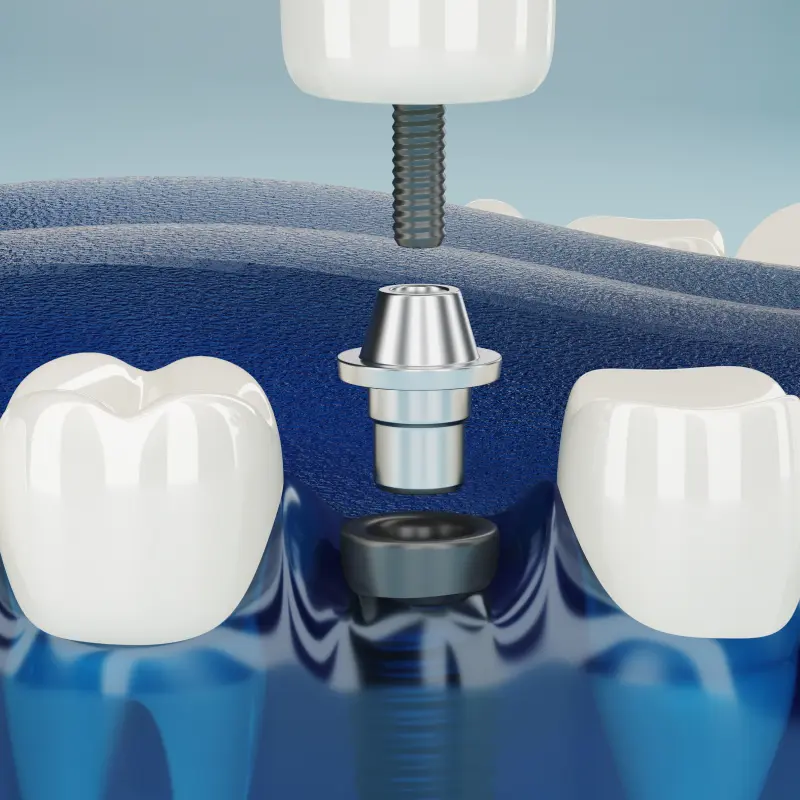
A removed implant can generally be reinserted using the correct techniques. One of the most common issues involves the crown attached to the implant becoming loose. In such cases, re-screwing may be needed. If the metal connector between the crown and gum detaches, it can often be reattached.
If the implant was removed due to periodontal disease, a more detailed evaluation may be required due to the risk of bone loss. Always consult with a dental professional to ensure appropriate and timely action.
Can All Dental Implants Be Removed?
Another frequently asked question is: Can all dental implants be removed? If an implant embedded in the jawbone is damaged, it may need to be removed using the proper methods. However, not every implant is easily removable.
Your dentist will perform evaluations, including 3D tomography scans, to determine whether the implant can be safely removed. While implants can technically be removed, removing associated parts like crowns may involve more complex procedures. As with placement, strictly following your dentist’s instructions during the removal process is vital.
Suggested content: Laser-Supported Dental Implants
What to Pay Attention to During Dental Implant Removal
Although most dental implant procedures are successful, removal may be necessary in some cases. If so, there are several things to keep in mind. Even if your dentist performs the procedure professionally, you should follow all their recommendations before, during, and after the procedure.
What should you be mindful of during implant removal? Here are a few key points:
- The surrounding area of the implant should be carefully evaluated. If there are nearby nerves or other implants, the procedure requires more precision.
- Each implant and patient has unique characteristics. The procedure should be fully customized to the individual’s needs, based on the dentist’s assessment.
- Your dentist will consider how long the implant has been in place. Long-term implants can be more difficult to remove.
- The size and shape of the implant matter. Longer implants are generally harder to remove.
- Your dentist will inform you of the entire procedure in advance. Following their instructions can help minimize potential risks.
- The degree to which the implant has integrated with the bone is crucial. Fully osseointegrated implants require more complex surgical removal.
- After removal, a treatment plan should be created to prevent the area from being left empty. This may include bone grafting or another implant.
In short, the answer to whether a dental implant can be removed is yes, but certain conditions must be met. To ensure all necessary evaluations are performed, consult with an experienced dental professional.