Today, cosmetic dentistry focuses on preserving the natural structure of teeth while achieving a more balanced and aesthetic smile. Small imperfections, gaps between teeth or permanent discoloration can often be corrected quickly and easily. Composite bonding is a modern, practical and minimally invasive method used for this purpose.
What is Composite Bonding?
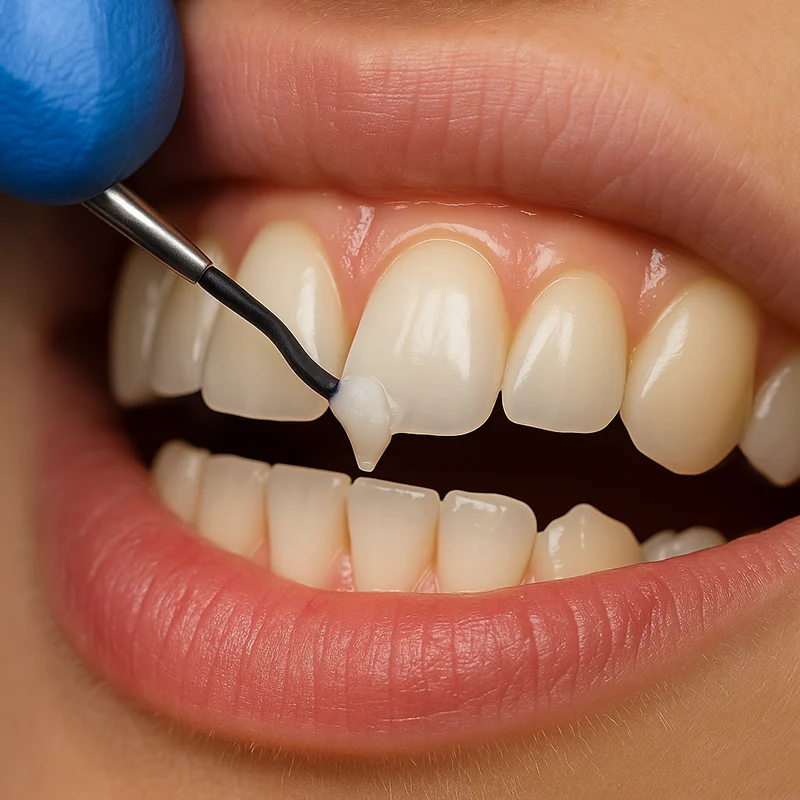
Composite bonding is a procedure where a tooth-colored composite resin is applied to the tooth surface to restore its appearance. With this method, the shape, size, color or minor cracks, chips and gaps in a tooth can be naturally corrected.
Composite bonding aims to preserve as much of the tooth structure as possible; in most cases, no significant drilling is needed, or only minimal surface preparation is done. It is mostly preferred for front teeth and is often completed in a single session. It’s a quick and effective option for stains that cannot be removed by whitening or to close gaps between teeth.
When is Composite Bonding Used?
Composite bonding allows cosmetic improvements without altering the natural structure of the tooth. It is commonly used for:
- Closing gaps between teeth (diastema)
- Repairing minor cracks or chips
- Covering permanent discoloration
- Reshaping corners or edges of teeth
- Visually lengthening worn or short teeth
Composite bonding is not an alternative to orthodontic treatment and does not change the position of the teeth. However, it can improve mild shape irregularities cosmetically.
How is Composite Bonding Done?
The procedure usually includes these steps:
- Consultation and Planning
The dentist examines the teeth, decides which teeth need treatment, and discusses the patient’s expectations. - Shade Selection
To achieve a natural look, the dentist selects a composite shade that matches the patient’s teeth. Sometimes multiple shades are layered for a better result. - Tooth Surface Preparation
If needed, the tooth surface is lightly roughened to help the bonding adhere better. In most cases, this does not require significant drilling, is painless and usually does not need anesthesia. - Applying the Bonding Agent
After cleaning the tooth surface, a special bonding agent is applied. This ensures the composite material attaches firmly to the tooth. - Applying the Composite Resin
The selected composite material is layered onto the tooth. Each layer is shaped and then cured with a special light. This process is repeated until the desired natural shape is achieved. - Shaping and Polishing
Once all layers are applied, the surface is shaped, edges are smoothed and polished for a natural, glossy finish.
For a single tooth, the treatment usually takes about 30–60 minutes. If multiple teeth are treated, the duration will be longer.
Advantages of Composite Bonding
- Preserves natural tooth structure; only minimal preparation if needed
- Can be completed in a single visit
- No extra lab work required
- More affordable than porcelain veneers or crowns
- Visible improvement immediately after the procedure
- Can be reversed or repaired if needed
Limitations of Composite Bonding
- Composite material is not as durable as porcelain
- May wear down or discolor over time
- Hard foods, nail biting or pen chewing can reduce lifespan
- Teeth grinding (bruxism) can increase the risk of chipping
- Coffee, tea and smoking may cause staining
How Long Does Composite Bonding Last?
The lifespan of composite bonding depends on oral care and habits. On average, it can last 3–7 years. With good care and regular dental check-ups, it can last up to 8–10 years.
| Treatment | Composite Bonding | Porcelain Veneer |
|---|---|---|
| Treatment Time | Single visit | Approx. 5–7 days |
| Tooth Preparation | Minimal or none | More extensive |
| Durability | 3–7 years | 10–15 years |
| Cost | More affordable | Higher cost |
| Reversibility | Can be reversed | Permanent |
Aftercare for Composite Bonding
- Avoid coffee, tea and smoking for the first 48 hours
- Do not bite hard foods with bonded teeth
- Avoid habits like nail biting or pen chewing
- Brush and floss regularly
- If you grind your teeth, wear a night guard
- Visit your dentist every 6 months for check-ups and polishing if needed
Composite Bonding Cost
The cost of composite bonding depends on the number of teeth treated and the material used. It is generally a more cost-effective option than porcelain veneers or crowns. To get an exact price, your teeth should be examined in person. If you’d like an estimate, you can fill out our free online consultation form.
Learn More About Composite Bonding
Composite bonding is a quick, conservative and effective cosmetic solution. It helps you achieve small aesthetic corrections while keeping your teeth’s natural structure intact. With proper planning and care, you can enjoy a healthy, beautiful smile for years to come. If you’d like to find out whether composite bonding is right for you, contact our clinic for more details and take advantage of a free initial consultation.