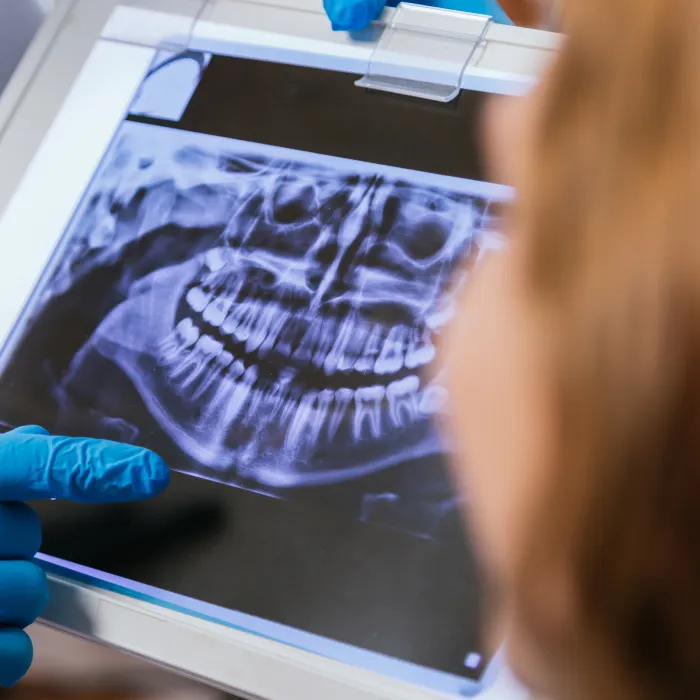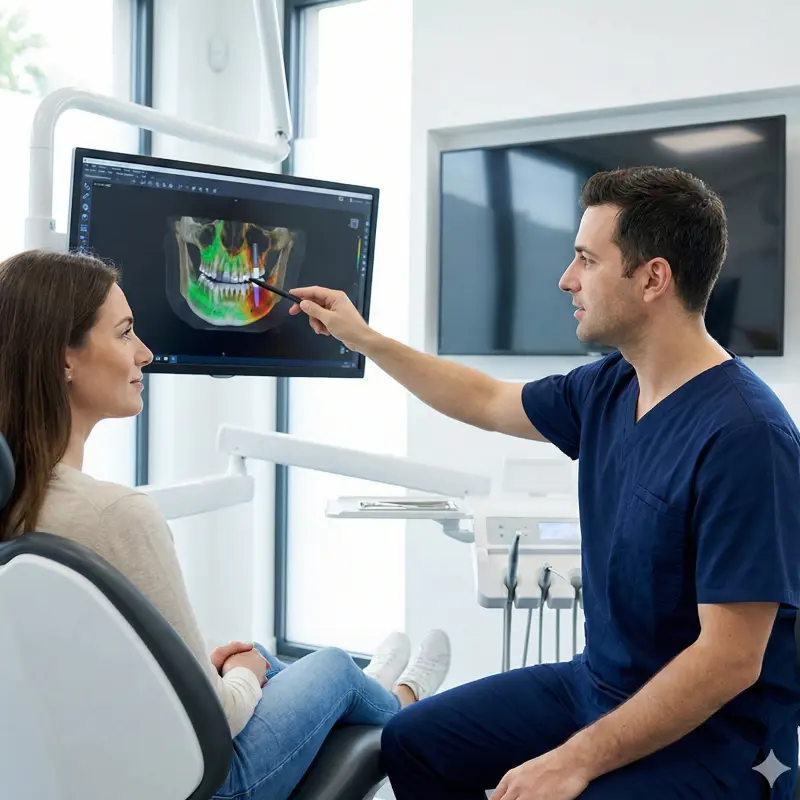
Placing a dental implant on the same day as a tooth extraction is called an Immediate Implant (Same-Day Implant). This method is faster than the traditional implant procedure and can provide the patient with both the implant and a temporary tooth on the same day. However, an immediate implant is not suitable for every patient. Its success depends entirely on proper patient selection, bone quality, infection status, and the surgeon’s experience.
This comprehensive guide explains in detail who is suitable for immediate implants, in which situations they cannot be applied, and how the treatment process works step by step.
What Is an Immediate Implant?
An immediate implant is an implant placed directly into the extraction socket at the moment the tooth is removed. In other words:
- The tooth is extracted
- The socket is cleaned
- The implant is placed immediately
- A temporary tooth is usually attached
This procedure is typically completed in a single session.
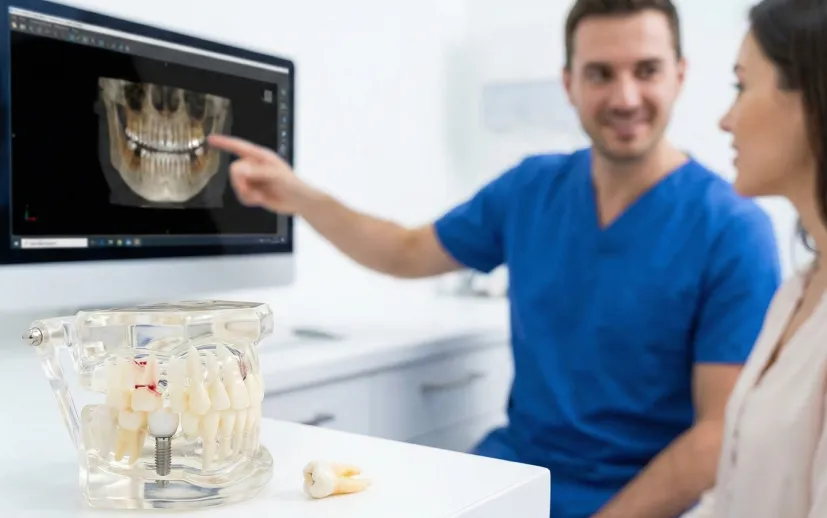
Common reasons why immediate implants are preferred:
- Prevents bone loss after extraction
- Shortens the total treatment time
- Prevents going without a tooth in the aesthetic zone
- Provides a one-visit solution
- Preserves the shape of the soft tissue
Despite all these advantages, immediate implants are not suitable for every case, and complications are more likely if proper planning is not done.
Who Is Suitable for Immediate Implants?
To ensure a successful immediate implant, several criteria must be met. Here are the common characteristics of patients suitable for this method:
1. Adequate Bone Quality and Volume
Although the implant is placed into the extraction socket, there must be strong, healthy bone surrounding it to ensure stability. If bone density or volume is insufficient, the implant will not remain stable.
Suitable cases include:
- Adequate cortical bone in the extraction area
- Bone density at D1–D2–D3 levels
- Sufficient remaining bone height in the sinus area
2. No Deep or Extensive Infection
Superficial infections can be cleaned and controlled, but:
- Advanced bone infection
- Large apical lesions
- Cysts
- Severe periodontal infection
make immediate implant placement risky.
3. Atraumatic Tooth Extraction
For an immediate implant, the tooth must be removed:
- Without fracturing the bone
- Without damaging the socket walls
- With minimal trauma
If the extraction is difficult, complicated, or traumatic, and the bone is damaged, an implant may not be placed on the same day.
4. Healthy Gum Condition
Healthy gums are important because they:
- Support faster healing around the implant
- Reduce the risk of infection
- Provide more natural esthetic results
Immediate implant placement is not recommended when active periodontitis is present.
5. Suitable General and Systemic Health
The patient should:
- Not smoke (or smoke minimally)
- Have diabetes under control
- Not use medications that affect bone metabolism
- Have a stable immune system
These factors directly affect the osseointegration period of the implant.
6. Adequate Bone Support in the Aesthetic Zone
Immediate implants are highly advantageous in the anterior (esthetic) region because:
- Gum esthetics are easier to preserve
- No papilla loss occurs
- There is no period of toothlessness
However, if the labial bone is too thin, immediate implantation may not be suitable.
Who Is NOT Suitable for Immediate Implants?
Certain situations clearly contraindicate immediate implant placement. In these cases, risks increase significantly, and delayed implant surgery is preferred.
1. Severe infection, abscessed tooth, or root-end cyst
If a deep infection is present:
- The extraction site cannot be fully cleaned
- The osseointegration success rate decreases
In such cases, it is usually safer to wait a few weeks.
2. Very Insufficient Bone Volume
If the socket walls do not provide enough support, the implant cannot remain stable.
In these cases, the following are preferred:
- Bone grafting
- Sinus lifting
- Delayed implant placement
3. Heavy Smoking
More than 10–15 cigarettes per day significantly reduces the success rate of immediate implants.
4. Uncontrolled diabetes or severe systemic diseases
These patients have reduced healing capacity and higher infection risk.
5. Traumatic tooth fractures or bone damage
If the root is fractured or the bone is damaged during extraction, same-day implant placement is not recommended.
6. Severe bruxism (teeth grinding)
Because early loading may occur, excessive force can damage the implant.
Advantages of Immediate Implants
- Completed in a single session
- No toothless period
- Bone volume is preserved
- More esthetic results
- Significantly shorter treatment period
- Faster socket healing
- Less pain and swelling
Disadvantages of Immediate Implants
- Not suitable for every patient
- Requires high bone quality for stability
- Deep infections increase failure risk
- Requires very detailed planning
- Surgical expertise is critical
What Is the Success Rate of Immediate Implants?
Clinical studies show that the success rate of immediate implants is approximately:
- 92% – 98%
In patients who meet the proper criteria, the success rate is as high as that of traditional implant procedures.
Main factors that influence success:
- The socket must be infection-free
- Stable implant placement
- The surgeon’s experience
- The patient’s smoking habits and oral hygiene
- Proper occlusal adjustment of the temporary tooth
How Does the Immediate Implant Process Work?
1. Examination and 3D Tomography Analysis
Bone thickness, density, and infection status are evaluated.
2. Atraumatic Tooth Extraction
The tooth is extracted with minimal trauma, without damaging the surrounding bone.
3. Cleaning of the Socket
All granulation tissue and infected areas are thoroughly removed.
4. Placement of the Implant
The implant is securely anchored into the cortical bone.
5. Placement of the Temporary Tooth
Most patients receive an esthetic temporary tooth on the same day.
6. 3–6 Months of Healing and Osseointegration
After this period, a permanent porcelain or zirconia crown is placed.
Frequently Asked Questions (FAQ)
Can Immediate Implants Be Applied to Everyone?
No. Although immediate implants may seem appealing, they are not suitable for every patient. The most critical factors in determining eligibility are:
- Sufficient bone volume
- High bone density
- No deep or widespread infection
For example, if there is a large abscess, cyst, or advanced bone loss at the root tip, placing an implant immediately can be risky.
In such situations, typically:
- The infection is treated first,
- A healing period is allowed after extraction,
- Then a traditional implant is planned.
Other important factors include the patient’s overall health, medications, smoking habits, and diabetes management.
In summary: Immediate implantation is a “fast solution,” but not a universal method that can be applied to everyone; proper case selection is essential.
Is an Immediate Implant a Painful Procedure?
Pain during the procedure is almost zero because:
- It is performed under local anesthesia,
- Sedation (semi-sleep state) can be used if necessary,
- General anesthesia can be applied for extremely anxious patients.
Most patients feel only pressure and vibration during the procedure, not “sharp pain.”
After the procedure:
- Mild to moderate pain or sensitivity during the first 24–48 hours is normal,
- Proper painkillers make this period easy to manage,
- Most patients return to daily life comfortably after the 3rd day.
Many report that the process feels more comfortable than the traditional extraction + waiting + implant method.
What Is the Success Rate? Is It as Safe as a Traditional Implant?
Scientific studies report a success rate of 92–98% for immediate implants. This rate is comparable to traditional implants when the patient is properly selected.
Factors that increase success:
- Complete removal of infection from the socket
- High bone density at the implant site
- Strong primary stability
- A properly designed temporary crown without excessive force
- Not smoking or significantly reducing smoking
- Good oral hygiene and regular check-ups
Is the Tooth Placed Immediately Permanent?
Most patients receive a temporary tooth on the same day. This tooth:
- Provides esthetics (especially in the front teeth),
- Improves speech and smile comfort,
- Prevents the psychological impact of being toothless.
However, this tooth is not permanent because:
- The implant needs 3–6 months to integrate with the bone,
- Forces on the tooth must be minimized during this period.
Once osseointegration is complete:
- The implant is reassessed,
- Impressions are taken,
- A permanent zirconia or porcelain crown is fabricated.
Yes, a tooth is placed the same day, but it is a temporary esthetic solution; the permanent crown is placed after the implant fully integrates.
Is Infection a Complete Barrier? Can an Abscessed Tooth Get an Implant the Same Day?
The distinction here is important:
- Superficial gum inflammation or mild infections can often be cleaned and controlled, making immediate implantation possible in selected cases.
- However, a large abscess, root-end cyst, advanced bone infection, or severe periodontal damage significantly reduces implant success.
In these cases:
- The tooth is extracted and the infected tissue is removed,
- Antibiotics may be prescribed,
- The implant is placed later once the area has healed.
In short: not every infection is a 100% barrier, but in cases of deep and widespread infection, waiting for the right moment is much safer than rushing.