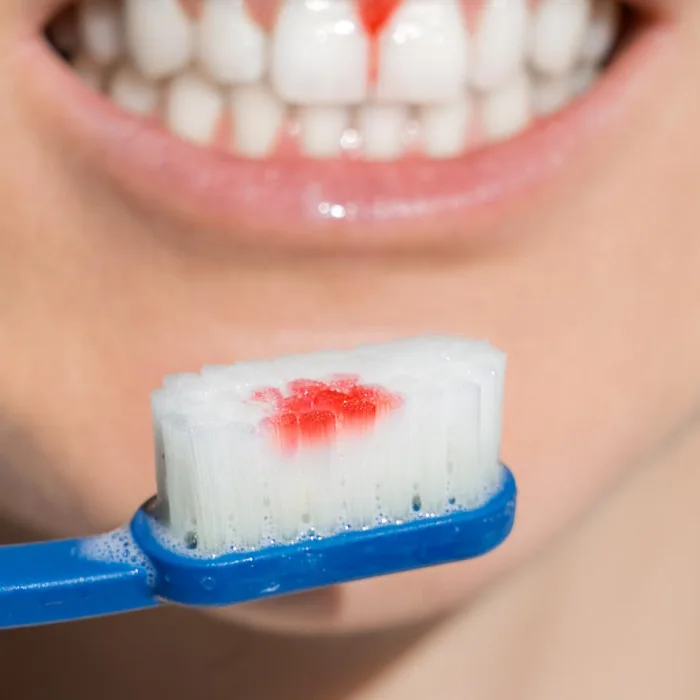
The pink/red water you see in the sink while brushing your teeth…
Blood traces left when biting an apple…
Gums that bleed and hurt when using dental floss…
All of these are often dismissed as “something that happens to everyone”, but they may actually be a health alert in your mouth.
In this article, I will explain the causes of gum bleeding, when it is dangerous, what you can do at home, and treatment options in a detailed and understandable way.
What is Gum Bleeding?
Gum bleeding is the bleeding of the gums due to inflammation, irritation, trauma, or systemic disease.
It usually occurs:
- While brushing your teeth
- While using dental floss
- When biting something hard
- Sometimes spontaneously without any trigger
A single, mild bleeding may not always indicate a serious problem. However, repeated, consistent bleeding while brushing, or bleeding that occurs suddenly is often the first sign of gum disease.
“It Happens to Everyone” – But It’s Not Normal
The most common mistake is:
“My gums bleed, but it happens to everyone, it must be normal…”
No, healthy gums rarely bleed. Gum bleeding indicates that in that area:
- There is inflammation
- There is microbial plaque buildup
- The tissue is weak
In other words, bleeding is your body telling you, “There’s a problem here, pay attention!”
Most Common Causes of Gum Bleeding
Insufficient and Irregular Oral Care
The most frequent cause of gum bleeding is irregular or incorrect oral care.
- Brushing only once a day
- Not using dental floss
- Incorrect or no use of mouthwash
- Brushing teeth too quickly or superficially
These habits lead to plaque buildup on the teeth. As plaque accumulates, the gums become inflamed, leading to gingivitis; the most noticeable sign is bleeding.
Hard or Incorrect Brushing Technique
Some people think, “The harder I brush, the cleaner my teeth will be.” Actually, the opposite is true:
- Using a very hard-bristled brush
- Brushing back and forth horizontally with force
- Pressing the brush hard against the gums
These actions irritate the gums, causing both bleeding and recession.
Tartar (Calculus) Buildup
When regular brushing is neglected, plaque on the teeth hardens over time with minerals in saliva, forming tartar.
Tartar:
- Presses on the gum line
- Harbors bacteria in large quantities
- Creates chronic inflammation at the gum line
This results in persistently bleeding, swollen, and red gums.
Hormonal Changes (Pregnancy, Adolescence, Menstrual Cycle)
Especially during:
- Pregnancy (pregnancy gingivitis)
- Adolescence
- Pre-menstrual periods
- Hormone treatments
Hormonal changes can make the gums more sensitive. The same amount of plaque can cause more inflammation and bleeding during these times.
Smoking
Interestingly:
- Smoking narrows blood vessels in the gums.
- This can sometimes mask bleeding.
Smokers’ gum disease progresses faster, but bleeding may not always be obvious. Therefore, a smoker saying “I don’t bleed, so my gums are healthy” can be misleading.
Nutritional Deficiencies (Especially Vitamin C and K)
- Vitamin C deficiency weakens connective tissue and makes gums more prone to bleeding.
- Vitamin K is necessary for blood clotting; deficiency can make bleeding last longer.
Poor nutrition, rapid weight-loss diets, or monotonous eating habits negatively affect gum health.
Certain Medications
Especially:
- Blood thinners
- Some blood pressure medications
- Anticoagulant therapies
These can increase gum bleeding. In such cases, both your dentist and your physician should be informed.
Systemic Diseases
Sometimes gum bleeding is not just a local problem, but a sign of another condition in the body. For example:
- Diabetes
- Blood disorders
- Immune system disorders
In these cases, gums are more prone to inflammation and bleeding.
Gum Bleeding is Not Just an Aesthetic Issue
Seeing gum bleeding as merely “unsightly” is a mistake. Untreated gum disease can lead to:
- Gum recession
- Bone loss supporting the teeth
- Loose teeth
- Tooth loss in advanced stages
Additionally, chronic gum inflammation has been linked to:
- Cardiovascular diseases
- Difficulty controlling diabetes
- Low birth weight risks during pregnancy
So, bleeding in your mouth may affect more than just oral health.
When to Take It Seriously: Alarm Signs
If you notice any of the following, it’s not just a “common bleeding”; you should see a dentist:
- Gums bleeding spontaneously, even without brushing
- Persistent bleeding that occurs every time you brush
- Swelling, redness, or bruising of the gums
- Bad breath or bad taste in the mouth
- Teeth starting to loosen
- Pus (yellow discharge) along the gum line
- Bleeding accompanied by pain or swelling in the face or jaw
These may indicate advanced periodontal disease beyond simple gingivitis.
What You Can Do at Home: Proper Daily Oral Care
The key to preventing gum bleeding and improving mild problems is a proper oral care routine.
Choosing the Right Toothbrush
- Use a medium or soft-bristled brush.
- The brush head should not be too large and should reach the back teeth comfortably.
- Replace your brush every 3 months or when the bristles start to fray.
Correct Brushing Technique
- Place the brush at a 45-degree angle to the gum line.
- Use small circular and sweeping motions instead of harsh horizontal movements.
- Brush at least twice a day for 2–3 minutes.
- Brush not only the visible front surfaces, but also the back surfaces and chewing surfaces.
- Gently brush your tongue to reduce bad breath.
Dental Floss and Interdental Care
A toothbrush cannot reach between the teeth. Plaque often accumulates in these areas. Therefore:
- Using dental floss at least once a day is essential for gum health.
- If you are new to flossing, bleeding may increase initially; this indicates inflammation. With regular use, bleeding usually decreases in a few weeks.
- In some cases, interdental brushes may be recommended in addition to floss; consult your dentist for guidance.
Mouthwash
- Antiseptic mouthwashes can be used as supportive treatment, especially after tartar removal or gum therapy.
- However, uncontrolled long-term use may cause staining or taste changes in some mouthwashes, so follow the dentist’s instructions regarding duration and frequency.
Smoking and Sugar Consumption
- Smoking impairs gum tissue healing and reduces treatment success.
- Frequent sugar intake and sticky snacks increase plaque accumulation.
- Quitting smoking and reducing sugary foods directly benefit gum health.
Treatments Applied by Dentists
Home care is important, but not enough alone for advanced or chronic gum problems. Common dental treatments include:
Detailed Examination and Diagnosis
The dentist examines:
- Gum color, shape, and bleeding
- Plaque and tartar buildup on teeth
- Depth of gum pockets
- Tooth mobility
If necessary, x-rays are used to evaluate bone loss.
Tartar Removal (Scaling)
Tartar and plaque are removed with special ultrasonic devices and hand instruments. This procedure:
- Reduces inflammation along the gum line significantly
- May cause mild sensitivity initially, but provides quick relief
- Is usually recommended to be repeated every 6 months to 1 year
Root Surface Smoothing (Deep Cleaning)
If gum disease has progressed and gum pockets have deepened, superficial cleaning is not enough. In this case:
- The dentist cleans inflamed tissue and hardened plaque inside gum pockets
- The root surface is smoothed
- This allows the gum to reattach to the tooth
Advanced Periodontal Treatments
For neglected cases:
- Surgical interventions
- Regenerative (bone-supporting) procedures
- Gum grafts
The goal is to preserve existing teeth as much as possible while restoring healthy gum-tooth relationships.
Relationship Between Gum Bleeding and Overall Health
Chronic inflammation in the gums is not confined to the mouth.
Research shows that periodontal disease may:
- Increase the risk of cardiovascular disease
- Make blood sugar control in diabetes more difficult
- Be associated with certain pregnancy risks
Therefore, gum bleeding should not be seen as a minor “brushing issue” but as a warning related to your overall health.
Frequently Asked Questions
My gums bleed, if I stop brushing, will it go away?
On the contrary. Brushing less because your gums bleed increases plaque accumulation and worsens inflammation. Gentle, regular brushing and flossing help reduce bleeding. Of course, seeing a dentist is the best approach.
Is using only mouthwash enough for gum bleeding?
Mouthwash is supportive, not the main treatment. It cannot remove plaque or tartar.
- Provides temporary relief
- May reduce bad breath
But it cannot replace tartar removal and proper brushing.
I’m pregnant and my gums bleed a lot. Is taking medication unsafe?
Hormonal changes during pregnancy increase gum sensitivity and bleeding. In this period:
- Dental treatment and tartar removal are generally safe during the 2nd trimester, depending on overall condition and dentist’s plan.
- Medications and treatment plans must be evaluated together by the obstetrician and dentist.
It is wrong to avoid dental care during pregnancy. In fact, oral health should be monitored more carefully.
I’m on blood thinners. Is that why my gums bleed?
Blood thinners can increase any type of bleeding, including gum bleeding. But this does not mean your gums have no problems.
If you are taking blood thinners:
- Inform your dentist which medications you use
- Do not stop or change your medication on your own
- If bleeding is excessive, consult both your doctor and dentist
Will gum bleeding go away on its own?
Rarely, minor trauma-related bleeding may stop on its own. However:
- Persistent
- Worsens with brushing
- Accompanied by swelling, redness, or bad odor
Gum bleeding will not resolve permanently on its own. Professional examination and, if necessary, tartar removal or periodontal treatment are required.
Don’t Underestimate Gum Bleeding
Yes, gum bleeding can happen to anyone. But this does not mean it is normal.
- Establish a regular and proper oral care routine
- Brush at least twice a day and use dental floss
- Visit the dentist every 6 months
- Do not neglect tartar removal
These are the basic steps to prevent gum bleeding and maintain a healthy smile.
Instead of dismissing the blood you see every time you brush as “I’m used to it,” take this signal from your body seriously and do not delay seeing a dentist.