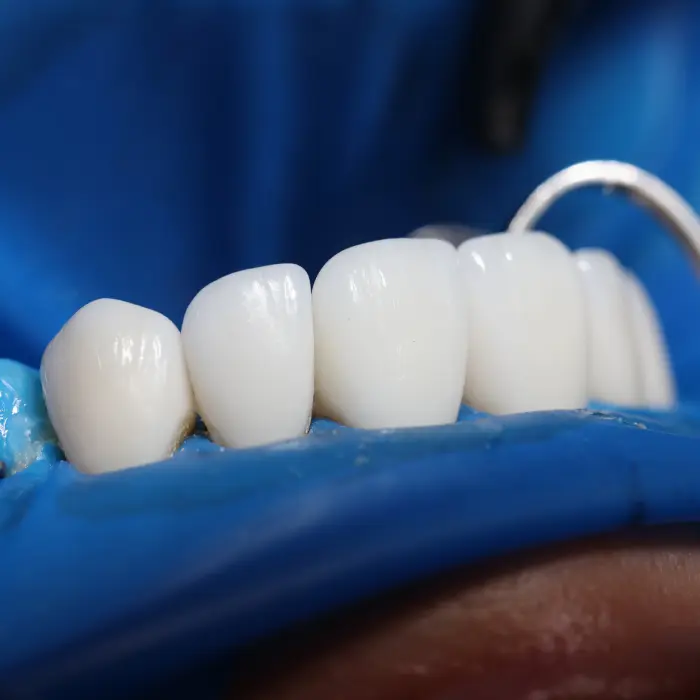
Zirconium dental crowns have become one of the most preferred restoration options in dentistry in recent years due to their aesthetic appearance and long-lasting durability. However, the most common question among patients is: “How long do zirconium crowns last, and do they need to be replaced over time?”
In this article, we explain in detail the average lifespan of zirconium crowns, the factors that extend or shorten this period, care recommendations, and their differences from other types of crowns.
What is a Zirconium Crown?
A zirconium crown is made of a ceramic-based material called zirconium dioxide (ZrO₂) that completely covers the tooth’s outer surface and provides an aesthetic appearance.
This material is biocompatible, meaning it is fully compatible with body tissues and does not cause allergic reactions.
It also contains no metal, which means there is no grayish-black reflection near the gum line.
Zirconium can be used for aesthetic purposes on front teeth as well as in areas that require durability in the back.
Nowadays, zirconium crowns are manufactured with computer-assisted measurements (CAD/CAM technologies), providing millimetric precision.
As a result, a restoration that closely resembles natural tooth color and is long-lasting is achieved.
Average Lifespan of Zirconium Crowns
The average lifespan of zirconium crowns is 10 to 20 years.
However, this is not a fixed number; many factors such as the patient’s oral hygiene and dietary habits can affect this duration.
With regular care, high-quality laboratory production, and proper dentist application, zirconium crowns can be used up to 25 years without problems.
In some patients, especially with preventive measures such as regular dental check-ups and night guards, zirconium crowns can last a lifetime.
However, just like natural teeth, changes in the gums around the crowns may occur over time, and aesthetic reasons may lead to replacement.
Factors Affecting the Lifespan of Zirconium Crowns
Although zirconium is structurally a very strong material, its lifespan depends entirely on usage conditions and environmental factors.
Let’s examine these factors in detail:
1. Oral and Dental Hygiene
Zirconium teeth do not decay; however, the underlying natural tooth is at risk of decay.
Therefore, it is very important to brush at least twice a day and use dental floss and mouthwash.
Poor cleaning can cause plaque and tartar buildup at the edges of the crown, leading to gum recession.
Over time, this may cause the crown margins to loosen, necessitating replacement.
2. Teeth Grinding and Clenching (Bruxism)
People who unknowingly grind their teeth at night may develop microscopic cracks on the zirconium surface.
Over time, this can lead to wear or fractures.
If bruxism is suspected, a dentist can provide a special night guard (splint) to protect both natural teeth and zirconium crowns.
3. Diet and Daily Habits
Zirconium is a very hard material; however, trying to bite hard objects such as nuts, ice, or bottle caps can create sudden stress on the crown.
Additionally, acidic drinks, smoking, and excessive coffee consumption negatively affect gum health and indirectly reduce the lifespan of the crown.
Balanced nutrition and avoiding bad habits help ensure long-lasting crowns.
4. Quality of Dentist Application
The lifespan of zirconium depends not only on the material quality but also on the dentist’s experience.
Excessive tooth reduction, inaccurate impressions, or improper cementation can compromise the crown’s marginal seal.
Therefore, the crown’s durability is directly related to the dentist’s skill and knowledge.
5. Regular Check-Ups and Professional Cleaning
Patients with zirconium crowns are recommended to have professional dental cleaning at least twice a year.
These cleanings remove tartar and bacterial plaque around the crown and maintain gum health.
Regular check-ups allow early detection and intervention for potential problems.
Tips for Long-Lasting Zirconium Crowns
For a long-lasting zirconium crown, the following simple but effective habits make a big difference:
- Brush your teeth regularly in the morning and evening. Pay special attention to the crown margins.
- Use dental floss or interdental brushes to clean between crowns.
- Avoid biting hard foods. Nuts, ice, and other hard foods can cause cracks.
- Use a night guard if you grind your teeth.
- Visit your dentist regularly. Early detection of small issues prevents the need for crown replacement.
- Avoid extreme temperature changes. Sudden hot-cold transitions can weaken the adhesive over time.
These recommendations help keep both the crowns and natural teeth healthy for a long time.
Zirconium or Porcelain: Which Lasts Longer?
Many patients ask, “Which is more durable, zirconium or porcelain?”
The answer is clear: zirconium crowns are more aesthetic and significantly more durable than porcelain and metal-supported crowns.
| Feature | Metal-Supported Porcelain | All-Ceramic | Zirconium Crown |
| Durability | 7–10 years | 10–12 years | 15–25 years |
| Aesthetics | Medium | High | Very high (natural tooth appearance) |
| Allergy Risk | High | Low | None |
| Color Change | Possible | Minimal | None |
| Light Transmission | Low | Medium | Natural level |
Therefore, zirconium is the ideal choice for patients seeking anterior esthetics or a long-lasting solution.
Frequently Asked Questions
Do zirconium crowns turn yellow over time?
Zirconium crowns, unlike traditional porcelain or composite crowns, maintain their color stability for many years.
The material has a highly translucent, smooth, and glass-like surface, making it difficult for stains from food, drinks, or smoking to adhere.
However, in some cases, color changes may occur in surrounding natural teeth. This is particularly seen in patients with high consumption of coffee, tea, red wine, or smoking. In such cases, the zirconium itself does not discolor, but there may be a color difference compared to natural teeth.
This difference can usually be corrected with professional cleaning or whitening procedures.
Can zirconium crowns fall off?
Zirconium crowns are fixed with special resin-based dental cements, providing a very strong bond.
Properly applied zirconium crowns rarely fall off on their own.
However, they may come off in rare cases:
- Decay under the tooth: If the underlying natural tooth decays, its shape changes and the cement may fail, causing the crown to loosen.
- Aged cement: If the crown is over 15 years old, the adhesive may degrade microscopically over time. In such cases, the crown can be re-cemented easily.
- Trauma or strong impact: A strong force, like a fall or accident, can dislodge the crown.
A fallen zirconium crown is usually reusable. The dentist can clean the underlying tooth, refresh the surface, and reattach the same crown. Therefore, it is not a serious problem.
Can zirconium crowns break?
Zirconium is one of the most durable ceramic materials used in dentistry.
It has a higher strength coefficient than natural tooth enamel.
However, no material is completely unbreakable, especially under these conditions:
- Bruxism: Continuous pressure on teeth at night can create micro-cracks that may lead to fracture over time. Night guards are recommended for bruxers.
- Biting hard objects: Ice, nuts, pencil tips, etc., can create stress on zirconium and cause breakage.
- Incorrect occlusion: If the bite is not properly adjusted, excessive load on some teeth can weaken the zirconium.
If a break occurs, there is no need to panic; zirconium crowns are usually repairable or easily replaceable. With modern CAD/CAM systems, a new crown can be made quickly using existing measurements.
When should zirconium crowns be replaced?
With proper care, zirconium crowns can last 20 years or longer.
However, natural changes in the mouth and gums occur over time.
Replacement is usually recommended in the following cases:
- Gum recession or color change: The margin may become visible, requiring replacement for aesthetic and hygiene reasons.
- Decay or wear under the crown: If the underlying tooth deteriorates, the crown should be removed, and the tooth treated.
- Desire for new alignment or esthetics: Crowns can be renewed to improve smile aesthetics or tooth alignment.
- Cracks or fractures: Micro-cracks detected after long-term use may warrant replacement for safety.
With regular dental check-ups, only the problematic crown needs to be replaced, not all of them.
How to care for zirconium teeth?
Zirconium teeth do not require special care as they are the closest artificial material to natural teeth, but regular and proper oral hygiene is crucial.
For long-lasting use, follow these steps:
- Brush twice daily with a soft toothbrush. Do not neglect crown margins; plaque accumulation can cause decay.
- Use dental floss and interdental brushes to clean food debris between crowns.
- Use fluoride toothpaste. Fluoride protects the underlying tooth structure.
- Use mouthwash. Antibacterial mouthwashes reduce gum inflammation and prevent bad breath.
- Avoid hard foods. Do not bite hard objects such as nuts, ice, bottle caps, or pencils.
- Have professional dental cleaning every 6 months. This removes microscopic stains on the crown and keeps gums healthy.
Patients who follow this routine can enjoy zirconium crowns with their original shine for over 10 years.