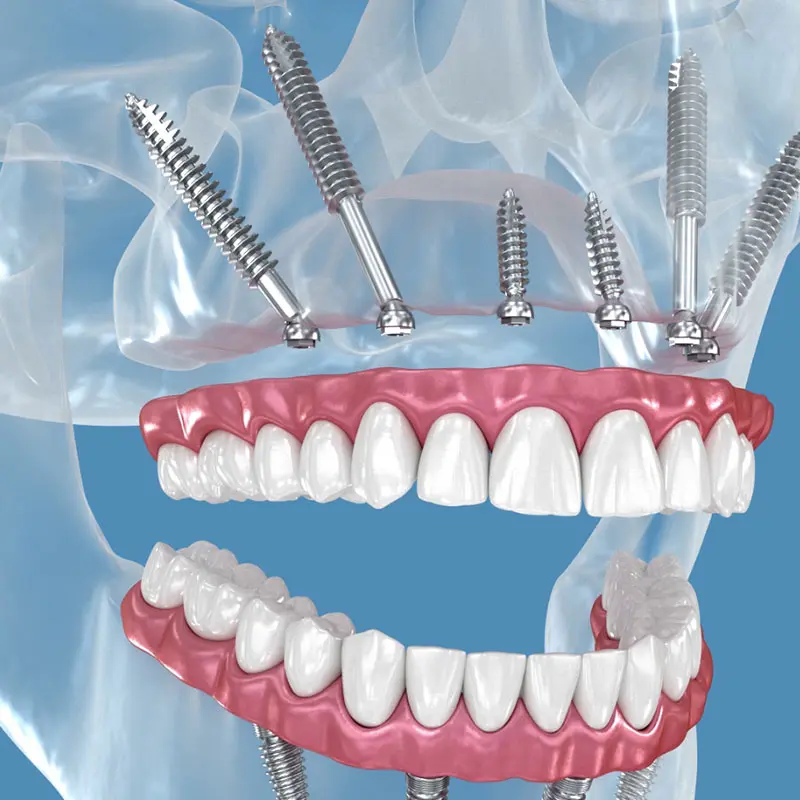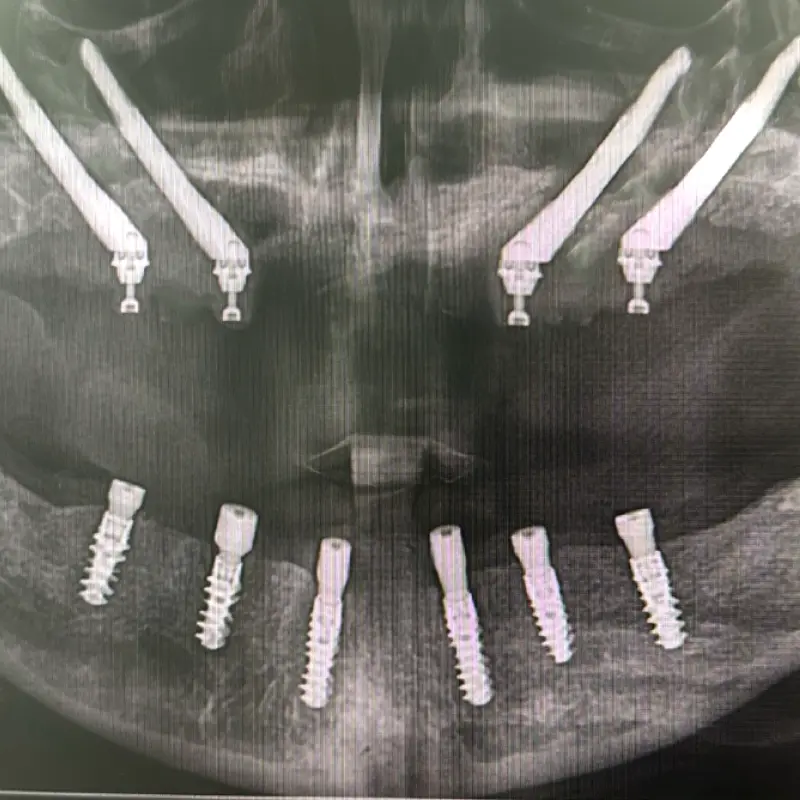
Zygomatic implant is a long and specially angled implant placed on the zygomatic bone (cheekbone), primarily used in patients with severely resorbed (atrophied) upper jawbone. Unlike standard implants, the surgical process is more complex due to its proximity to the maxillary sinus (upper jaw cavity), making post-operative care critically important.
With these implants:
- Esthetic smile design is achieved,
- Chewing function is restored,
- Implants can be placed even in patients with insufficient upper jawbone.
However, the long-term success of all these benefits is only possible with disciplined and correct care during the first month after surgery.
First 24 Hours – “Golden Time”
The first day after surgery lays the foundation for the healing process. During this period, bleeding, swelling (edema), and pain control are crucial.
Bleeding Management
- Why important? The clot formed in the surgical area acts as a natural wound cover. Disturbing it increases the risk of infection and delayed healing.
- Bite gently on the gauze placed by your surgeon for 30–45 minutes.
- If bleeding continues, apply a black tea bag (tannins → natural coagulant).
- Do not use a straw, forcefully spit, or rinse vigorously.
Swelling and Bruising Control
- Why important? Edema and bruising are fluid accumulations due to trauma. If uncontrolled, pain and pressure increase.
- Apply ice compress for the first 24 hours (20 min on / 10 min off).
- Sleep with your head elevated at a 30° angle.
- Avoid hot showers, sauna, or bath.
Pain Management
- Take your first painkiller before the anesthesia wears off.
- Use your antibiotics completely and regularly.
- Smoking and alcohol significantly slow healing during this period.
2–7 Days – Sensitive Transition Period
During the first week, stitches and clots stabilize, but the area is still very sensitive. Infection risk is high.
Nutrition Plan
- First 48 hours: cold liquids (yogurt, smoothies, pureed soup).
- From day 3: soft solids (boiled eggs, mashed potatoes, soft cheese).
- Very hot, hard, or spicy foods are risky.
Oral Hygiene
- No rinsing during the first 24 hours.
- From day 1, gently rinse 3–4 times daily with warm salt water.
- Use a soft brush to clean areas away from the surgical site.
Sinus Protection
- Do not blow your nose.
- When sneezing, keep your mouth open (to reduce pressure).
- Avoid air travel and diving.
8–14 Days – Controlled Normalization
During the second week, stitches are usually removed and healing visibly accelerates.
Expanding the Diet
- Well-cooked vegetables, soft fish, and minced dishes can be added.
- Hard nuts, chips, and chewing gum are still prohibited.
Advanced Hygiene
- Antimicrobial rinses (chlorhexidine) can be added.
- Use an interdental brush to gently clean around the implant.
- Wait for your dentist’s approval before using dental floss.
Dentist Check-up
- Stitches are usually removed during this period.
- Implant stability is evaluated.
15–30 Days – Osseointegration Period
The implant undergoes biological bonding with the bone (osseointegration). Although it may appear healed externally, internal structures are still delicate.
Avoid Trauma
- Do not chew hard foods.
- Protect the mouth during sports.
Nutrient-Rich Diet
- Protein and calcium → building blocks for bone healing.
- Recommended foods: yogurt, kefir, fish, eggs, dairy.
- Drink plenty of water → speeds up cell regeneration.
Long-Term Hygiene
- Brush at least twice daily.
- Make interdental brushes and floss a habit.
- Have professional cleaning every 6 months.
Common Mistakes and Consequences
- Hot foods/drinks → disrupt clot, increase bleeding.
- Touching the stitch area → infection risk.
- Stopping antibiotics prematurely → development of resistant bacteria.
- Smoking and alcohol → bone loss and implant failure.
1-Month Recovery Schedule
| Period | Diet | Hygiene | Notes |
| 0–24 Hours | Cold liquids | No rinsing | Ice compress, head elevated |
| 2–7 Days | Soft foods | Salt water, soft brush | Sinus pressure control |
| 8–14 Days | Vegetables, fish, minced dishes | Antimicrobial rinse | First dentist check |
| 15–30 Days | Protein & calcium | Daily routine care | Avoid sports & hard chewing |
Long-Term Success Through Disciplined Care
Zygomatic implants offer patients with insufficient upper jawbone a second chance. However, extending the success of surgery for many years is only possible with patience, attention, and disciplined care during the first month.
By following this guide, patients can use their implants safely for many years and enjoy a functional and aesthetic smile.
Frequently Asked Questions
1. How long does it take to heal after a zygomatic implant?
Generally, basic healing is completed within the first month. However, osseointegration (biological bonding of the implant with bone) takes about 3–6 months, depending on health, age, and care discipline.
2. Is pain normal after a zygomatic implant?
Yes, mild pain and soreness are normal for the first few days. It can be controlled with regular medication. If the pain is severe or prolonged, consult your dentist.
3. When can I eat normal foods?
First 48 hours: liquids; then soft foods for 1 week. Usually, from the 2nd week, more varied foods can be introduced under controlled conditions. Hard foods require dentist approval.
4. How long do swelling and bruising last?
Swelling usually decreases in 2–3 days, and bruising improves within 1 week. Regular ice application and keeping the head elevated speed up recovery.
5. Is there a risk of implant failure?
Like any surgery, there is a risk. However, the success rate for zygomatic implants is over 95%. Regular care and check-ups increase this rate.
6. Can I exercise?
Avoid trauma during the first month. Light walking is allowed, but running, weightlifting, and contact sports are not recommended.
7. Does smoking or alcohol affect healing?
Yes, both reduce blood circulation and slow bone healing, increasing the risk of implant failure. Avoid completely for at least the first month.
8. Can zygomatic implants last a lifetime?
With proper surgery, regular oral hygiene, and dental check-ups, zygomatic implants can last many years. Lifelong success is fully dependent on patient care.