


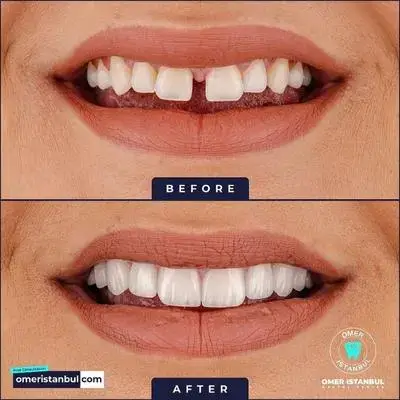
Smiling is one of the most powerful expressions that determines first impressions both in social life and in professional settings. However, yellowing, cracks, gaps, or shape deformities in the teeth can negatively affect smile aesthetics. Today, thanks to the solutions offered by cosmetic dentistry, these problems can be easily corrected. One of the most preferred methods among these solutions is laminate veneer, commonly known as porcelain veneers. In this article, we will explore in detail what laminate veneers are, how they are applied, their advantages, who they are suitable for, the treatment process, and how they differ from other methods.
What is a Laminate Veneer?
A laminate veneer is a cosmetic dental treatment in which very thin porcelain layers (0.3 – 0.7 mm thick) are bonded to the front surface of the teeth. It gets its name from its “leaf-like” thinness. This method allows for desired aesthetic improvements while preserving the natural structure of the tooth.
The most important feature of these veneers is that they provide a look very close to natural tooth enamel due to their light-transmitting properties. From the outside, the difference between the tooth and the veneer is indistinguishable. This is why laminate veneers are among the most preferred treatment methods, especially in smile design applications.
Advantages of Laminate Veneers
The popularity of laminate veneers is due to the significant advantages they offer both aesthetically and functionally.
Firstly, they stand out for their natural appearance. Porcelain layers transmit light and closely resemble the natural structure of teeth, making them an extremely aesthetic solution free from an artificial look.
Another major advantage is their durability. Despite being thin, porcelain is very strong. When applied correctly and maintained properly, they can be used safely for many years.
In addition, porcelain veneers are highly resistant to discoloration. While permanent stains caused by coffee, tea, and smoking often appear on natural teeth, porcelain veneers are unaffected. This allows them to maintain their initial whiteness for many years.
Compared to traditional crowns, one of their biggest advantages is that they require minimal tooth reduction. The entire tooth is not reduced; only a very thin layer of the front surface is removed. In some cases, they can even be applied without any reduction.
Finally, the quick treatment time also makes porcelain veneers attractive. The treatment process is usually completed within 7–10 days, allowing patients to achieve their new smile quickly.
Who is Suitable for Laminate Veneers?
Laminate veneers are an ideal treatment option for individuals concerned about the aesthetics of their front teeth.
- Those with permanent discoloration on their teeth,
- Those with cracks or fractures in their front teeth,
- Those with gaps between their teeth,
- Those with shape deformities in their front teeth,
- Individuals who want a whiter, straighter, and more symmetrical smile.
However, it is important to note that this treatment is not suitable for everyone. Patients with advanced gum disease, those who grind their teeth (bruxism), or those with serious bite problems must address these issues first.
How Does the Treatment Process Work?
Laminate veneer treatment consists of several stages and is usually completed in a short period.
- Examination and Planning: During the first appointment, the dentist examines the patient’s oral structure and determines whether they are suitable for treatment. The patient’s expectations are also considered, and the most suitable treatment plan is prepared.
- Digital Smile Design: With the help of frequently used digital software, patients can see their new smile before the treatment is completed. This step provides great confidence for the patient.
- Tooth Preparation: If necessary, a very thin layer is removed from the front surface of the teeth. This procedure is painless and often does not require anesthesia.
- Temporary Veneers: Temporary veneers are placed to maintain aesthetics while the laboratory process is ongoing.
- Porcelain Veneer Fabrication: Porcelain veneers are custom-made in the laboratory based on the impressions taken from the patient.
- Application: The prepared porcelain veneers are bonded to the teeth with special adhesives. The dentist ensures that both aesthetics and chewing function are taken into account during the application.
Generally, all these stages are completed within 7–10 days, and the patient achieves their new smile.
Lifespan and Care of Porcelain Veneers
Porcelain veneers can last 10–15 years or even longer when used correctly. However, their lifespan directly depends on the patient’s oral hygiene habits.
Regular brushing, flossing, and using interdental brushes, along with at least two dental check-ups per year, significantly extend the lifespan of veneers. Additionally, hard foods (like nuts) should not be cracked with teeth. Avoiding habits like nail-biting or teeth grinding also prevents damage.
With proper care, porcelain veneers maintain their aesthetic appearance for many years and allow individuals to smile confidently.
Laminate Veneers and Alternative Treatments
Laminate veneers are one of the most advanced and long-lasting solutions in cosmetic dentistry. However, alternative treatments may also be considered in certain cases.
Composite Veneers: Although more affordable, they are not as durable as porcelain and may discolor over time.
Full-Coverage Crowns: These require more tooth reduction since the entire tooth is covered. Aesthetically, they may not appear as natural as laminate veneers.
Teeth Whitening (Bleaching): This only addresses color changes and does not correct shape deformities or cracks.
Among all these options, laminate veneers stand out for their natural appearance, durability, and long-lasting results.
Frequently Asked Questions
Is laminate veneer treatment painful?
Patients usually feel no pain during laminate veneer treatment, as the procedure is very minimal. Only a very thin layer of the tooth is removed, and sometimes no reduction is necessary. Therefore, local anesthesia is often not required. However, for patients with sensitive teeth, anesthesia can be applied for comfort. Post-procedure pain is generally absent, though mild sensitivity may occur for the first few days. Laminate veneers are therefore a comfortable and pain-free treatment method.
Can laminate veneers fall off?
When applied correctly, porcelain veneers do not fall off. They are bonded with special adhesives and fit like a natural part of the tooth. However, excessive trauma, cracking hard foods like nuts, or severe teeth grinding may damage them. Patients should be mindful of oral habits to prevent risks. In rare cases where a veneer detaches, it can be rebonded or replaced.
How long does the treatment take?
Laminate veneer treatment is usually completed within 7–10 days. After the initial examination and planning, impressions are taken, and custom porcelain veneers are fabricated in the laboratory. Temporary veneers are used during this period. Once the veneers are ready, they are applied in a second session. In some cases, the lab process may be shorter, allowing treatment to finish in 4–5 days. Laminate veneers are therefore a quick aesthetic solution.
How many years do laminate veneers last?
With correct application and regular care, porcelain veneers can last comfortably for 10–15 years or longer. The most important factor is the patient’s oral hygiene. Regular brushing, flossing, and dental check-ups, along with avoiding biting hard foods and addressing teeth grinding habits, ensure long-lasting results.
Do they change color over time?
No. Porcelain veneers have an extremely smooth surface, so staining from coffee, tea, or smoking does not occur. While natural teeth may change color, porcelain veneers maintain their original whiteness for years. However, attention to overall oral care is necessary, as gums or adjacent natural teeth may still change color over time.



 Tooth?)