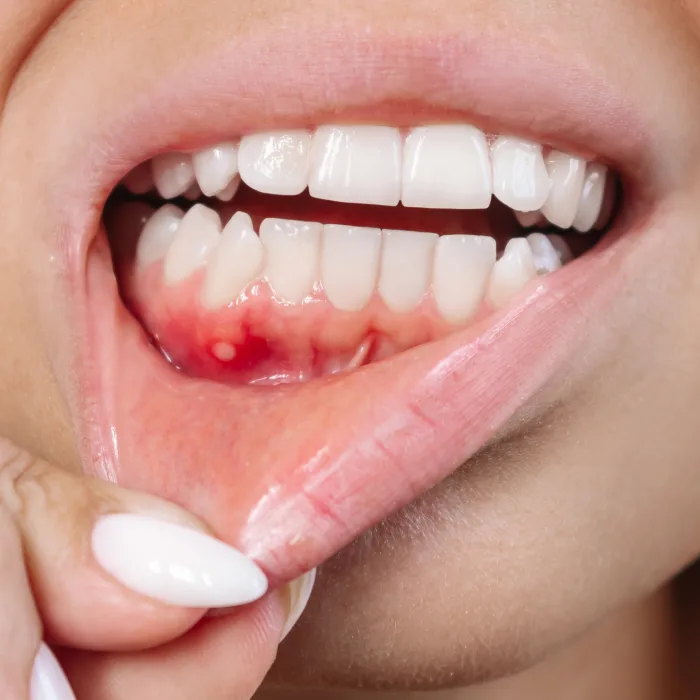
Tartar (also known as dental calculus) is a hardened layer of bacterial plaque that forms on teeth over time. Plaque that is not removed through daily brushing and flossing combines with minerals in saliva to form a hard substance. Tartar, especially when it accumulates along the gum line and on the back surfaces of teeth, is not just an aesthetic issue; it is a primary cause of serious conditions such as gingivitis and periodontitis.
Many people perceive tartar merely as “discoloration” or “dirt,” but the situation is much more serious. Tartar constantly presses on the gums, creates protected areas for bacteria to settle, and these bacteria irritate the gums, triggering inflammation. Over time, this process can lead to gum recession, bad breath, and even tooth loss.
What is Tartar?
Tartar is the hardened form of bacterial plaque that accumulates on the surface of teeth over time. Plaque is a thin, sticky layer made up of food debris, salivary proteins, and bacteria. Plaque formation is a natural process; it is produced by oral bacteria in everyone throughout the day. However, if plaque is not regularly removed, it mineralizes within about 24–48 hours, hardening into a substance that cannot be removed by brushing.
This hardened substance is called “tartar.” Tartar usually forms along the gum line, particularly on the back of the lower front teeth and the cheek side of the upper molars. This is because these areas have high concentrations of minerals such as calcium and phosphate secreted by salivary glands.
Over time, the surface of tartar becomes rough. This rough texture allows new bacteria and food debris to stick more easily, creating a vicious cycle: more tartar → more plaque → more inflammation. Therefore, tartar is not merely a cosmetic issue but a major source of oral infections.
How Does Tartar Form?
Tartar formation generally occurs in three stages:
First, a thin layer of bacteria called a biofilm forms on the tooth surface. This layer is transparent and usually goes unnoticed. If it is not removed through regular brushing, bacteria multiply and adhere firmly to the tooth surface.
In the second stage, this bacterial plaque combines with minerals in the saliva (especially calcium and phosphate) and hardens. At this point, the layer transforms from “plaque” to “tartar.” This process can take approximately 1–2 weeks.
In the third stage, tartar thickens, grows along the gum line, and begins to irritate the gums. At this point, the person may notice bleeding when brushing, gum sensitivity, and bad breath.
Factors that accelerate tartar formation include poor oral hygiene, smoking, saliva with high calcium content, insufficient water intake, irregular diet, and dry mouth.
Symptoms of Tartar
Tartar usually appears as hard deposits in white, yellow, or brown shades. However, people often do not notice it themselves because tartar can be hidden on the back surfaces of teeth or under the gums.
The first symptom is usually gum bleeding because tartar constantly irritates the gum line. In addition, bad breath (halitosis) is also a common result of tartar buildup.
Tartar can also form hard bumps along the gum line or create a chalky sensation. When looking in the mirror, you may notice yellowish areas between teeth that appear as “shadows.”
Over time, gums recede, exposing tooth roots, which can cause sensitivity to hot and cold. In advanced cases, tartar can grow so much that it disrupts tooth alignment and chewing function.
In short, if unnoticed, tartar causes damage not only to the tooth surface but to the entire oral structure.
How is Tartar Removed (Treatment Methods)?
Tartar cannot be removed at home because it is too hard to be cleaned with a toothbrush or dental floss. Effective and safe cleaning can only be performed by a dentist.
1. Tartar Cleaning (Scaling)
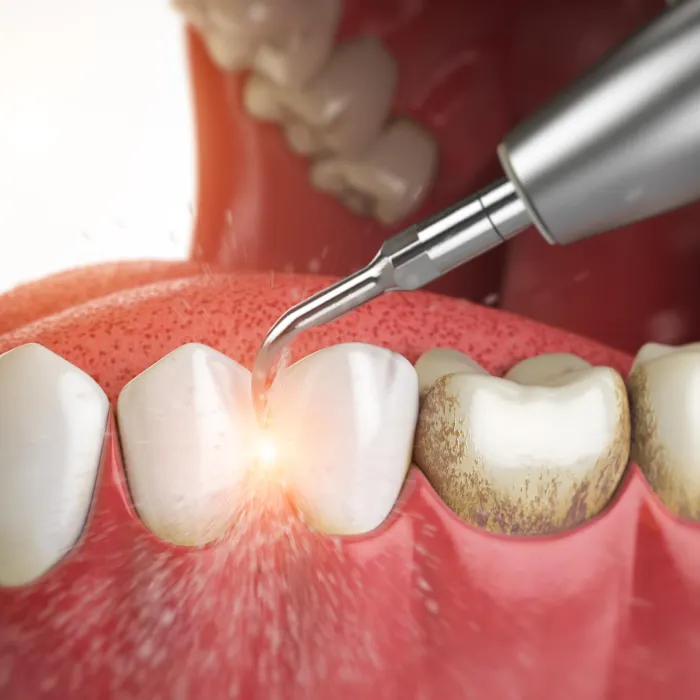
This procedure is performed using ultrasonic devices. The device breaks the tartar with high-frequency vibrations and removes it by spraying water.
Tartar along the gum line and between teeth is completely removed. The procedure is painless and usually takes 20–30 minutes.
After cleaning, the tooth surface is polished, making it harder for new plaque to stick.
2. Root Planing (Curettage)
If tartar has progressed below the gum line, simple cleaning is insufficient. In this case, curettage is performed under local anesthesia.
The gums are lifted, the underlying tartar is removed, and the surface is smoothed. This allows the gum to reattach to the tooth.
3. Regular Check-ups and Maintenance
Tartar removal should not be a one-time procedure. Since each person’s saliva composition, diet, and oral flora are different, tartar can re-form.
Therefore, visiting the dentist every six months prevents recurrence and allows early detection of potential inflammation.
Tips to Prevent Tartar Formation
- Brush your teeth for 2 minutes at least twice a day.
- Clean between your teeth with dental floss or interdental brushes.
- Use antibacterial mouthwashes.
- Limit sugary and starchy foods, as they increase plaque formation.
- Drink plenty of water to help saliva naturally remove bacteria.
- Avoid smoking and tobacco products, which accelerate tartar formation.
- Visit your dentist regularly.
While it is not possible to completely prevent tartar, these habits protect gum health and significantly slow down its formation.
Is Tartar Cleaning Harmful?
There is a common misconception: “Cleaning tartar weakens teeth.”
This is entirely false.
Tartar cleaning only removes foreign substances from the tooth surface and does not damage the enamel.
On the contrary, if tartar remains on the gum line, bacteria continue to live there, slowly eroding both enamel and bone.
After cleaning, teeth may experience temporary sensitivity due to long-term tartar coverage. The gum tissue recovers within a couple of days, and bleeding during brushing decreases.
So, tartar cleaning does not weaken teeth — it protects them.
Removing Tartar is the Most Important Step for Oral Health
Tartar is the starting point of gum diseases. Without regular cleaning, bacteria accumulate along the gum line, inflammation begins, and supporting tissues of the teeth are damaged.
Early tartar removal is the most effective way to break this chain.
At Ömer Istanbul Dental Center, we perform precise and painless tartar cleaning using modern ultrasonic devices.
After treatment, each patient receives personalized care recommendations, minimizing the risk of recurrence.
Frequently Asked Questions
Why does tartar form, and does everyone get it?
Tartar forms when bacterial plaque accumulating on teeth during the day is not completely removed. Plaque is a thin, sticky layer made up of saliva, food debris, and bacteria. If this layer is not removed with brushing and flossing, it combines with minerals in saliva, hardens, and becomes “tartar” within a few days.
Some people genetically have “calcium-rich” saliva, making tartar form faster. Smoking, dry mouth, high sugar/starch diet, and insufficient water intake also accelerate tartar formation.
In short, plaque forms in everyone’s mouth and if not cleaned well, tartar can develop. So, it is not correct to think “it won’t happen to me”; it just accumulates faster in some people and slower in others.
What happens if I don’t remove tartar? Is it just a cosmetic issue?
Seeing tartar as merely discoloration or a cosmetic problem is a big mistake. Its main harm is constantly irritating the gums and providing a hiding place for bacteria.
Tartar presses on the gum line, bacteria produce toxins, and the gums enter “defense mode.” This begins with gingivitis, causing red, swollen, and bleeding gums. If untreated, inflammation reaches deeper, eroding the bone that holds teeth, resulting in periodontitis.
During periodontitis, teeth may loosen, gaps appear, and they start to move. Often, this leads to tooth loss. Therefore, tartar removal is not just cosmetic but a protective treatment to preserve your teeth.
Can I remove tartar at home? Using vinegar, baking soda, or scraping?
No, attempting to remove tartar at home is both ineffective and very risky.
Tartar is firmly attached to the tooth surface. Toothbrushes, floss, or regular mouthwash cannot remove it; they only reduce new plaque formation.
Scraping with metal objects (needle, toothpick, craft knife, etc.) scratches enamel, damages gum tissue, and increases infection risk. Often, only small surface fragments are removed, while underlying tartar and bacteria remain.
Using vinegar, lemon, or baking soda in uncontrolled amounts can also erode enamel and cause sensitivity. Therefore, tartar cleaning must be performed professionally by a dentist using proper devices.
How often should tartar be cleaned? Annually or every 6 months?
Frequency depends on the individual, considering saliva composition, diet, smoking, and oral hygiene habits. Generally:
- For an average person, every 6 months is ideal for dental check-up and tartar cleaning if needed.
- For rapid tartar formers, smokers, or those with sensitive gums or periodontitis history, intervals may be every 3–4 months.
- For those with excellent oral care, non-smokers, and low tartar formation genetically, annual cleaning may be sufficient, but check-ups are still necessary.
The best approach is for your dentist to recommend a personalized schedule based on your oral condition. Consider tartar cleaning as periodic maintenance rather than a one-time task.
Does tartar cleaning weaken teeth or make gaps appear?
This is one of the most common misconceptions.
Tartar cleaning does not weaken your teeth. Only the hardened layer attached to the teeth is removed, not the natural tooth structure.
Some patients feel “my teeth gaps widened” or “my teeth got thinner” after cleaning. In reality, tartar had filled the spaces between teeth for years. Once removed, teeth return to their natural state. What is removed is tartar, not tooth structure.
Also, teeth may show temporary sensitivity after cleaning due to long-term tartar coverage. This is temporary, and sensitivity decreases as gums heal and the enamel remineralizes. Using appropriate desensitizing toothpaste can make this period more comfortable.