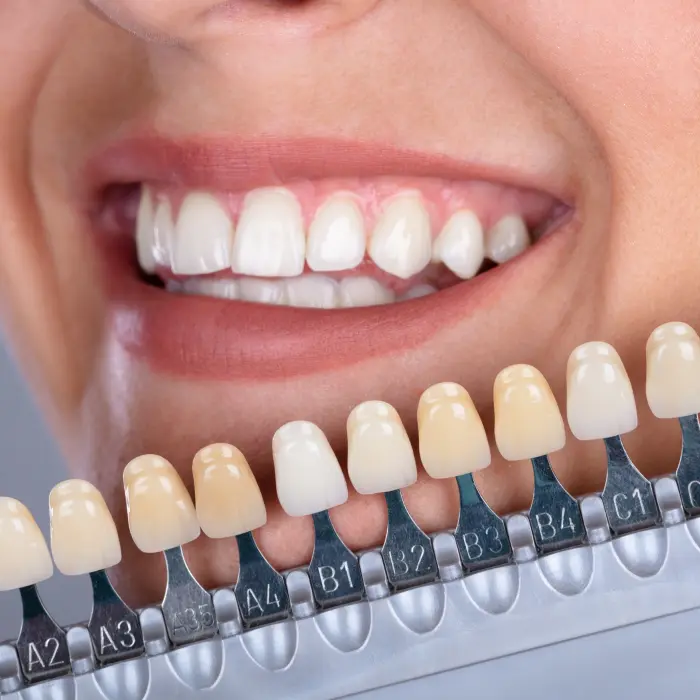
Smiling is one of the most powerful tools of communication in social life. However, teeth that are aesthetically problematic, broken, or discolored can reduce this confidence. One of the most frequently preferred solutions in modern dentistry is dental veneers. Among veneer treatments, the most frequently asked question is: Zirconia or porcelain?
In this article, we will examine the two types of veneers in detail and compare their advantages and disadvantages.
What is a Zirconia Veneer?
Zirconia veneers are an aesthetic material with a metal-free substructure that has passed all durability tests with flying colors.
Zirconia veneers stand out in cosmetic dentistry due to their versatility and accessibility. These veneers are made from a composite resin material similar to that used in dental fillings. They are known for their ability to provide significant aesthetic improvement in a relatively short period of time.
What is a Porcelain Veneer?
Porcelain veneers are thin ceramic pieces bonded to the front surface of your teeth to transform your smile. They look like natural teeth while providing strength and stability. Due to their aesthetically pleasing appearance, strength, durability, and long lifespan, porcelain is often the preferred material for veneers.
Porcelain veneers are famous for their durability and realistic appearance, making them a preferred option for those seeking a long-lasting and natural-looking solution. Made from high-quality ceramic materials, these veneers are designed to mimic the translucency and texture of natural teeth, offering a unique aesthetic result.
Porcelain veneers are undoubtedly the best choice to achieve high-quality results from your treatment. Modern techniques and materials mean that dentists no longer need to excessively shave down teeth to fit the veneers.
Zirconia vs Porcelain Veneers
| Feature | Zirconia Veneer | Porcelain Veneer |
| Aesthetics | Very close to natural teeth, high translucency | Metal-supported ones may appear opaque |
| Durability | Very high, can be safely used on back teeth | Better for front teeth, risk of breakage on back teeth |
| Allergy Risk | Metal-free, biocompatible | Metal-supported ones may cause allergic reactions |
| Lifespan | 10–15 years and above | 7–10 years |
| Cost | Generally higher than porcelain | More economical options available |
Differences Between Zirconia and Porcelain Veneers
Since zirconia veneers are produced using the latest technological methods, they have excellent compatibility with teeth and gums. Porcelain veneers, on the other hand, are produced using traditional methods, which may result in minor compatibility errors with teeth and gums.
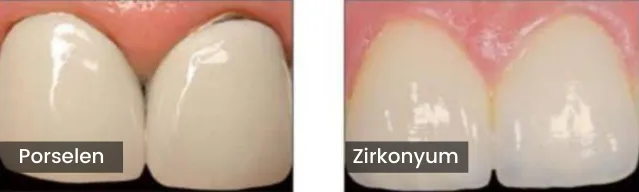
Because zirconia veneers have a metal-free substructure, the grayish appearance of the gums does not occur over time. In porcelain veneers, metal substructures may react with oral fluids over time, causing grayish discoloration in the gums.
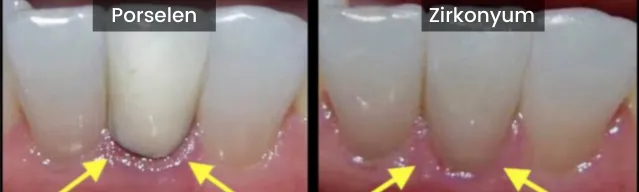
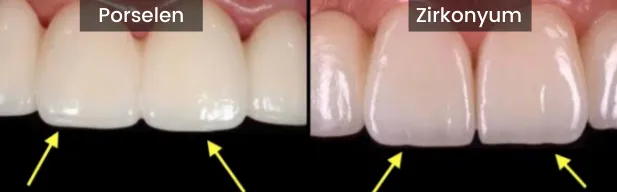
Porcelain veneers have almost zero light transmission, resulting in a matte and dull appearance, whereas zirconia veneers allow light transmission, creating a more vibrant and natural color harmony.
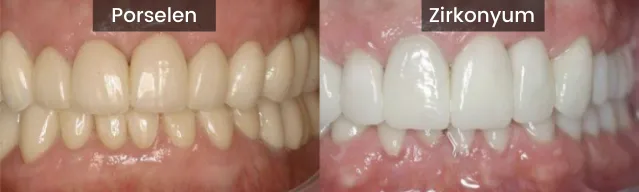
Zirconia naturally resolves microscopic cracks in its internal structure without any external intervention. Porcelain veneers do not have this feature.
Zirconia is a highly durable material that can withstand occlusal pressures and strong jaw forces, whereas porcelain veneers may bend or flex under certain pressures in the mouth.
The adhesive materials used for zirconia veneers are the latest technological products, providing a much stronger bond to the tooth. Porcelain veneers use more traditional adhesive materials.
Zirconia veneers allow easy shaping, contouring, and aesthetic modifications similar to natural teeth, whereas porcelain veneers have limited options in this regard.
Which Veneer Should Be Preferred in Which Situation?
- For Aesthetic Priorities: Zirconia veneers are the most preferred option due to their natural appearance.
- For Budget-Friendly Solutions: Metal-supported porcelain veneers are more affordable.
- For Allergy-Prone Patients: Zirconia is safe because it contains no metal.
- For High Durability on Back Teeth: Zirconia veneers are much more long-lasting.
Veneer Treatment at Ömer Istanbul Dental Center
Our clinic applies both zirconia veneers and porcelain veneers using the latest technological devices.
- With digital smile design, you can see your new smile before the veneer treatment.
- Measurements are taken with the Papaya 3D Tomography device for flawless application.
- Our experienced dental team ensures long-lasting results both aesthetically and functionally.
Frequently Asked Questions
Are zirconia veneers more durable than porcelain?
Zirconia veneers are much more durable compared to porcelain. They can be used without issues for many years on both front and back teeth. Porcelain veneers, while aesthetically satisfying on front teeth, may crack or break under high chewing forces on back teeth.
What is the lifespan of zirconia and porcelain veneers?
With proper oral care, zirconia veneers can last 15 years or more, whereas porcelain veneers have an average lifespan of 7–10 years. Regular dental check-ups, good oral hygiene, and avoiding habits such as teeth grinding help extend the lifespan of veneers.
Which veneer looks more natural?
Zirconia veneers provide a natural appearance very close to real teeth due to their translucency, making them ideal for aesthetic smile designs. Metal-supported porcelain veneers have low light transmission, which can cause a slightly opaque appearance. Full porcelain veneers (like E-Max) offer a more aesthetic look, but zirconia combines both aesthetics and durability.
Does the veneer treatment cause pain?
Local anesthesia is applied before veneer placement, so the patient feels no pain during the procedure. Mild sensitivity may occur for a few days after treatment, which is normal and temporary.
Does gum color change with porcelain veneers?
Yes, metal-supported porcelain veneers may cause a gray-black reflection at the gum line over time, which negatively affects aesthetics and looks unhealthy. Zirconia veneers do not have this issue as they have a completely white substructure.