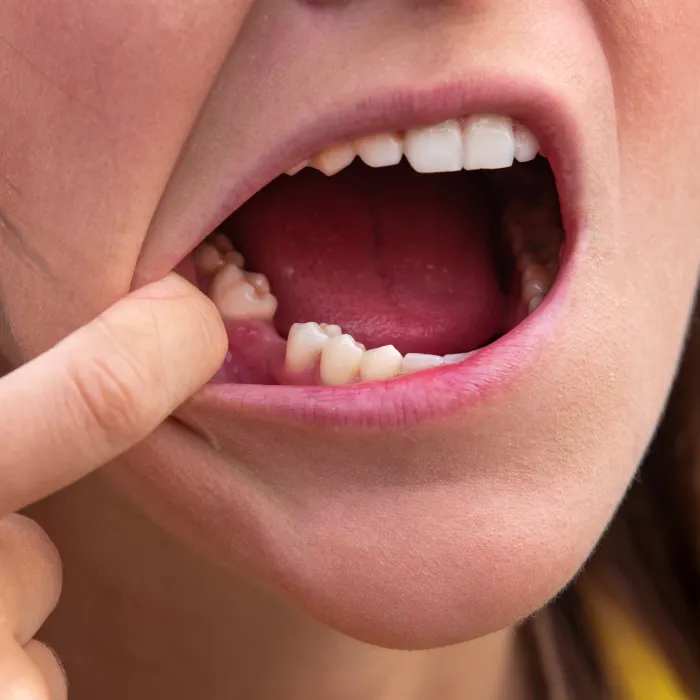
Today, implant treatment is one of the most successful methods for completing missing teeth with a natural appearance and long-lasting results. However, since each patient’s bone structure, aesthetic expectations, and general health vary, not everyone may be suitable for conventional implant treatment.
This is where Zygoma (zygomatic) implants stand out as a special solution offering hope for patients with insufficient upper jawbone.
In this comprehensive guide, we explain in detail the differences between zygoma implants and conventional implants, which treatment is suitable for which cases, success rates, healing periods, and who is the right candidate.
What Is a Zygoma Implant?
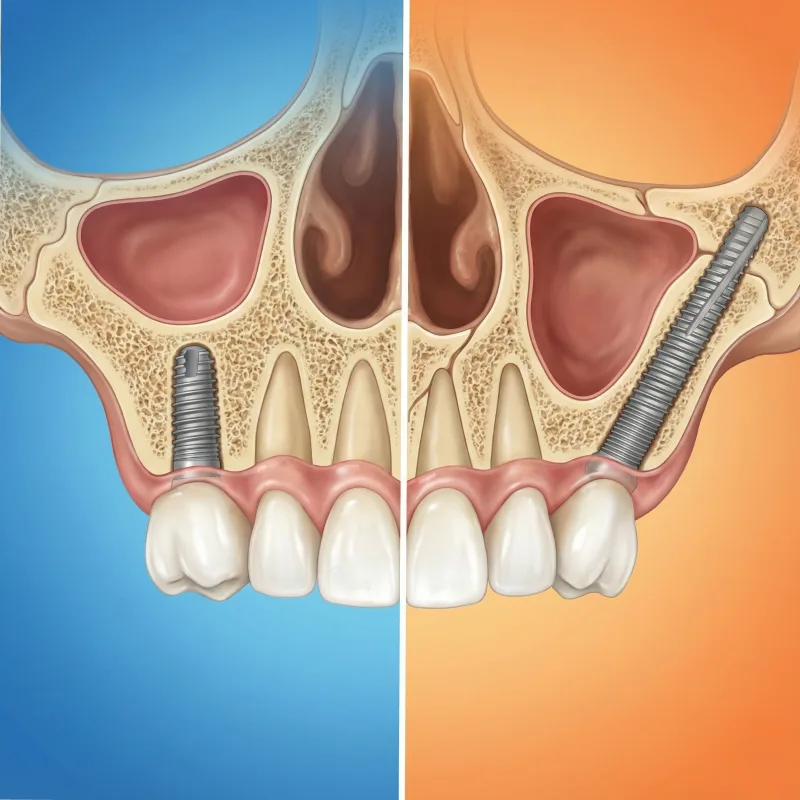
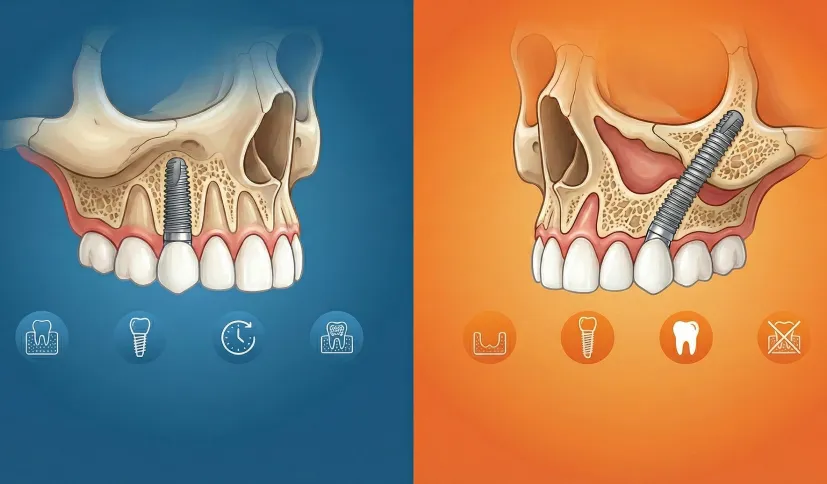
Zygoma implant is a type of implant used in patients with advanced bone loss in the upper jaw. These implants are longer than conventional implants and placed at special angles. Instead of anchoring into the maxillary bone, they are fixed into the cheekbone (zygomatic bone).
Therefore:
- No bone graft (bone powder augmentation) is required.
- Sinus lifting surgery is often unnecessary.
- Immediate loading (same-day fixed teeth) is possible.
Zygoma implants are specifically designed for:
- Patients with severe bone loss in the upper jaw
- Patients with a highly sagged sinus floor
- Edentulous (toothless) patients
- Long-term denture users with significant bone resorption
- Patients who are not suitable for All-on-4
With these features, zygoma implants offer a successful solution even for cases where “conventional implant is not possible.”
What Is a Conventional Implant?
A conventional dental implant is an artificial titanium root placed into the jawbone to replace missing teeth. It integrates with the bone to provide a stable foundation.
Conventional implants are suitable for:
- Cases with sufficient bone volume
- Patients who do not require additional bone surgery
- Mild to moderate localized bone loss
- Single-tooth gaps
- Restorations in aesthetic regions
Today, the most frequently used type of implant is still the conventional one. However, if bone structure is insufficient, success decreases.
Technical Differences Between Zygoma and Conventional Implants
Placement Area
- Conventional implant: Into the jawbone (maxilla/mandible).
- Zygoma implant: Into the cheekbone (zygomatic bone).
The zygomatic bone is anatomically denser and stronger, therefore does not resorb.
Length
- Conventional implant: 8–16 mm
- Zygoma implant: 35–55 mm
This length provides strong anchorage even in advanced bone loss.
Placement Angle
- Conventional: Vertical / slightly angled
- Zygoma: Inserted at special angles from back to front
Therefore, zygoma implants require advanced surgical expertise.
Healing Time
- Conventional implant: 3–6 months osseointegration
- Zygoma implant: Usually same-day fixed teeth are possible
Zygoma implants provide ideal stability for immediate loading.
Need for Bone Augmentation
- Conventional implant: Bone grafting or sinus lifting may be required if bone is insufficient
- Zygoma implant: Usually no additional surgical procedure is needed
Which One Is More Suitable?
Patients Suitable for Conventional Implants
- Those with sufficient jawbone
- Patients with localized tooth loss
- Patients seeking implants in aesthetic zones (front teeth)
- Young and middle-aged adults
- Patients wanting a quick and minimally invasive treatment
Conventional implants are always the first choice in patients with adequate bone structure.
Patients Suitable for Zygoma Implants
- Patients with severe bone loss in the upper jaw
- Patients with bone loss due to long-term denture use
- Patients with large/wide sinus cavities
- Patients whose bone grafts have failed or who experienced implant failure
- Patients with insufficient bone for All-on-4
- Advanced cases wanting same-day fixed teeth
Zygoma implant is a powerful solution for all upper jaw bone resorption cases where “implant is not possible.”
Success Rates of Zygoma and Conventional Implants
Success rates vary among clinics, but literature averages are as follows:
Conventional Implant Success Rate
- 95% – 98% (if bone is adequate)
Zygoma Implant Success Rate
- 97% – 100%
- High success even after 10+ years of follow-up
The reasons for the high success of zygoma implants include:
- The zygomatic bone is dense and strong
- Very low chance of bone resorption
- The implant anchors into a deeper and larger surface area
Treatment Duration Comparison
| Treatment | Conventional Implant | Zygoma Implant |
| Surgical Duration | 15–30 minutes | 45–90 minutes |
| Healing | 3–6 months | Same-day fixed teeth (in most cases) |
| Additional surgery | May be required | Usually not required |
| Prosthesis process | 1–3 months | 24–72 hours |
| Pain/swelling | Moderate | Moderate–high but short-term |
Advantages of Zygoma Implants
- Implants can be placed even with severe bone loss
- Bone grafting and sinus lifting are often unnecessary
- Same-day fixed teeth option
- Full-mouth rehabilitation in a single session
- High success rate
- The safest option for advanced cases
Disadvantages of Zygoma Implants
- Requires advanced surgical expertise
- Only suitable for the upper jaw
- Longer operation time
- Higher risk of complications with inexperienced surgeons
They can be safely applied in clinics with zygoma experience, such as Ömer Istanbul Dental Center.
Who Should Prefer Conventional Implants Instead of Zygoma?
- Patients with adequate bone structure
- Patients with single-tooth gaps
- Those wanting maximum natural aesthetics in the front region
- Patients preferring less invasive surgery
In these situations, conventional implants are more suitable.
How Should the Treatment Be Selected?
The following criteria must be evaluated for proper planning:
- CBCT (3D tomography) bone volume assessment
- Condition of the sinus cavity
- Bone quality
- Aesthetic expectations
- Age
- General health condition
- Duration of edentulism
At Ömer Istanbul Dental Center, all zygoma and conventional implant decisions are made with 3D digital planning, I-Metric measurement, and dio navigation technology.
Which Implant Is More Suitable for You?
If:
✔ Your bone structure is sufficient → Conventional implant
✔ There is advanced bone loss in the upper jaw → Zygoma implant
✔ You want fast, same-day fixed teeth → Zygoma implant (Same-Day Teeth)
✔ There is a single-tooth gap in the aesthetic zone → Conventional implant
✔ You previously experienced implant failure → Zygoma implant
Both solutions provide excellent results when used in the right case. What matters most is proper planning and an experienced zygoma surgery team.
Frequently Asked Questions
Can zygoma implants be applied to everyone?
No. Zygoma implants are designed only for patients with advanced upper jaw bone loss where conventional implants are not suitable. If the upper jaw still has adequate bone, conventional implants are usually preferred first.
To determine suitability for zygoma implants, the following must be evaluated:
- CBCT (3D tomography) scans
- Density of the zygomatic bone
- Sinus anatomy
- Systemic medical conditions
Long-term denture users, patients with failed implants, or unsuccessful bone grafts are ideal candidates for zygoma implants.
Is there a difference in success rates between zygoma and conventional implants?
Both implant types are highly successful when placed in the right cases. However, zygoma implant success rates are generally 97–100%, while conventional implant success rates are around 95–98%.
The success of zygoma implants is higher because the zygomatic bone is a very dense, resorption-resistant structure.
Is it really possible to get teeth on the same day after zygoma implants?
Yes. One of the biggest advantages of zygomatic implants is that they provide extremely strong initial stability due to the bone they anchor into. This allows many patients to receive:
- Temporary fixed prosthesis
- Fixed bridge
- Full-arch temporary teeth
on the same day. This procedure is called “Same-Day Teeth,” ensuring that the patient is not left without teeth after surgery.
Why can’t conventional implants be applied in some patients?
In some patients, the upper jawbone is so resorbed that there is not enough structure for the implant to hold on to. This bone loss is usually caused by:
- Long-term denture use
- Expansion of the sinus cavity
- Aging
- Periodontal disease
- Previous failed implants
In such cases, the success of conventional implants is low, and zygoma implants become a safer option.
Is zygoma implant surgery painful?
The surgical procedure is completely painless because it is performed under:
- General anesthesia, or
- Sedation + local anesthesia
Post-operative swelling and sensitivity may be slightly more than conventional implants, but this usually completely subsides within 2–5 days. Pain can be easily controlled with prescribed medications.